English
 Español
 tiếng việt
 русский
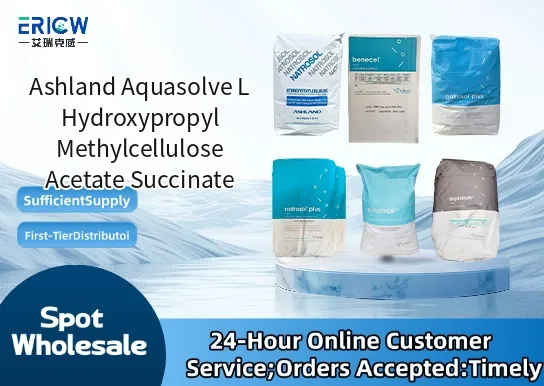
Enteric polymer designed for pH-dependent dissolution in the upper intestine (pH ≥ 5.5).
Enables amorphous solid dispersion stabilization to enhance bioavailability of poorly water-soluble APIs.
Offers excellent film-forming capability and thermoplastic processability for hot-melt extrusion (HME).
Provides robust physical stability and inhibits drug crystallization during storage under accelerated conditions.
Complies with USP/NF, EP, and JP monographs for pharmaceutical excipients.
Amorphous solid dispersions (ASDs) for oral solid dosage forms.
Enteric-coated tablets and pellets targeting intestinal release.
Hot-melt extruded (HME) dosage forms requiring thermal stability and melt viscosity control.
Sustained-release matrix systems leveraging pH-responsive solubility behavior.
Stabilizer for nanosuspensions and spray-dried dispersions in preformulation development.
| Chemical Type | Cellulose derivative — hydroxypropyl methylcellulose acetate succinate (HPMCAS) |
| Product Form | Free-flowing white to off-white granular powder |
| Appearance | White to light tan, free-flowing granules |
| Primary Applications | Pharmaceutical solid dispersion carrier, enteric coating agent |
| Key Features | pH-dependent solubility, HME-compatible, API stabilization |
| Benefits | Enhanced solubility & bioavailability, reduced crystallization risk, regulatory compliance |
| Storage Conditions | Store in original container at 15–30 °C, protect from moisture |
| Regulatory Status | USP/NF, EP, JP; DMF on file; compliant with ICH Q5C stability guidelines |
Contact With Us:
E-mail: wangxingqiang@ericwchem.com
Have a Questions? Call Us:
Add:
Building A1, Jiete Industrial Park, Huangpu District, Guangzhou City, Guangdong Province, China