English
 Español
 tiếng việt
 русский
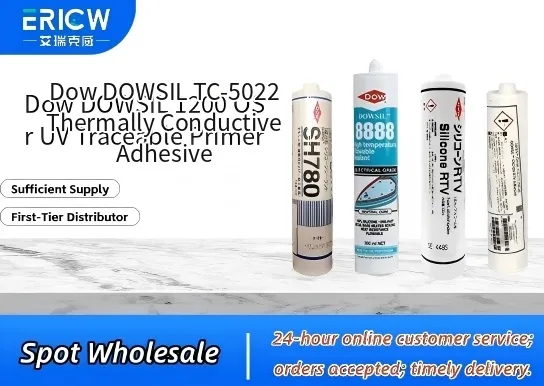
High thermal conductivity (≥ 2.2 W/m·K) for efficient heat dissipation in demanding electronic assemblies.
Low modulus silicone formulation enables stress relief and accommodates coefficient of thermal expansion (CTE) mismatches.
Room-temperature cure with optional heat acceleration, supporting flexible manufacturing workflows.
Excellent adhesion to common substrates including aluminum, copper, ceramics, and FR-4 PCBs without primers.
UL 94 V-0 rated for flame resistance, meeting critical safety requirements in power electronics and automotive systems.
Thermal interface bonding of IGBT modules and power semiconductor packages in electric vehicle inverters.
Attachment of heat sinks to LED drivers and high-brightness LED arrays in outdoor lighting systems.
Die-attach and thermal management of sensors and control units in automotive under-hood electronics.
Thermal bonding of battery module components, including cell-to-heat spreader interfaces in EV battery packs.
| Chemical Type | Filler-loaded addition-cure silicone elastomer |
| Product Form | Two-component paste (Part A + Part B) |
| Appearance | Off-white, homogeneous paste |
| Primary Applications | Structural thermal interface material (TIM) for power electronics |
| Key Features | Thermally conductive, electrically insulating, low-stress, flame retardant |
| Benefits | Enables miniaturization, improves long-term reliability, reduces thermal resistance at interfaces |
| Cure System | Pt-catalyzed hydrosilylation (RT cure; accelerated at 80–125°C) |
| UL Recognition | UL 94 V-0 (per UL 746C, 1.5 mm thickness) |
Contact With Us:
E-mail: wangxingqiang@ericwchem.com
Have a Questions? Call Us:
Add:
Building A1, Jiete Industrial Park, Huangpu District, Guangzhou City, Guangdong Province, China