English
 Español
 tiếng việt
 русский
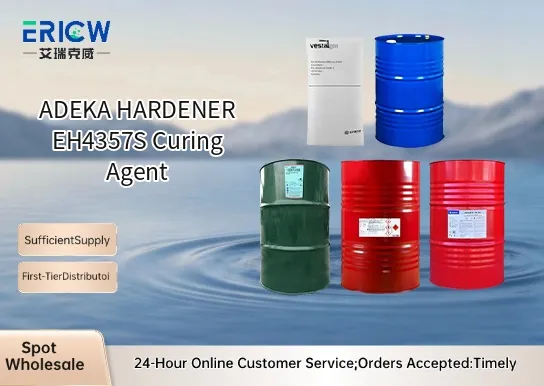
High reactivity with epoxy resins, enabling rapid gelation and reduced cycle times in industrial curing processes.
Excellent compatibility with standard bisphenol-A and bisphenol-F epoxy systems without phase separation.
Low viscosity at room temperature, facilitating easy handling, metering, and homogeneous mixing.
Good thermal stability and low volatility, supporting safe processing and extended pot life under ambient conditions.
Produces cured networks with high glass transition temperature (Tg) and superior mechanical strength.
Electrical encapsulation and potting compounds for power electronics and transformers.
Structural adhesives for automotive and aerospace composite bonding.
High-performance coatings for corrosion protection in marine and industrial environments.
Wind turbine blade bonding and repair formulations requiring fast-cure capability and toughness.
Prepreg systems and filament-wound composites demanding precise stoichiometric control and low exotherm.
| Chemical Type | Amine-based aliphatic curing agent |
| Product Form | Liquid |
| Appearance | Pale yellow to light amber clear liquid |
| Density (25°C) | 0.92–0.96 g/cm³ |
| Viscosity (25°C) | 200–400 mPa·s |
| Amine Value | 380–420 mg KOH/g |
| Primary Applications | Epoxy resin curing for structural composites, adhesives, and electrical insulation |
| Key Features | Rapid cure, low viscosity, high Tg capability, and excellent chemical resistance |
Contact With Us:
E-mail: wangxingqiang@ericwchem.com
Have a Questions? Call Us:
Add:
Building A1, Jiete Industrial Park, Huangpu District, Guangzhou City, Guangdong Province, China