English
 Español
 tiếng việt
 русский
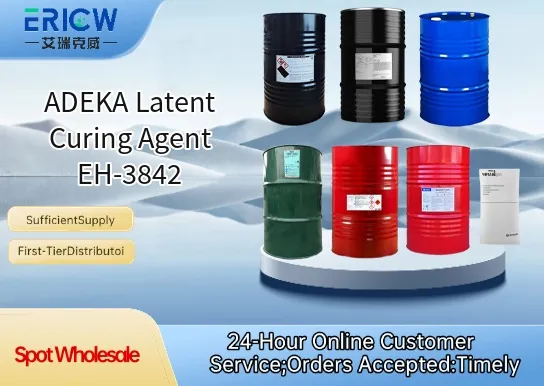
Highly latent at room temperature, enabling extended pot life and excellent storage stability.
Activates rapidly upon thermal triggering (typically >100 °C), ensuring efficient and controllable epoxy curing.
Delivers superior mechanical properties and thermal resistance in cured epoxy systems.
Low volatility and minimal odor, supporting safer handling and improved workplace hygiene.
Compatible with standard bisphenol-A and novolac epoxy resins without requiring co-catalysts.
Prepregs for aerospace and high-performance composites.
Electrical encapsulants and potting compounds for power electronics.
Structural adhesives requiring precise process control and long shelf life.
Coatings for metal substrates demanding high crosslink density and chemical resistance.
3D printing resins where thermal latency enables layer-by-layer deposition before final cure.
| Chemical Type | Modified imidazole derivative |
| Product Form | Powder |
| Appearance | Off-white to light tan free-flowing powder |
| Primary Applications | Epoxy resin curing agent for high-performance thermosets |
| Key Features | Latent, thermally activated, low volatility, resin-compatible |
| Recommended Storage | Below 25 °C, dry and dark conditions; stable for ≥12 months |
| Activation Temperature Range | 100–180 °C (cure onset ~100 °C) |
| Typical Loading Level | 3–8 phr (parts per hundred resin), depending on resin type and performance requirements |
Q1: What is the primary function of EH-3842 in epoxy systems?
A: EH-3842 is a latent thermal curing agent designed to remain inactive at room temperature, enabling extended pot life and improved processing stability, then initiate efficient epoxy crosslinking upon heating to its activation temperature range.
Q2: At what temperature does EH-3842 typically begin to activate?
A: Activation begins gradually above approximately 100 °C, with robust curing performance observed in the range of 120–160 °C. The exact onset and rate depend on formulation composition, heating profile, and desired cure schedule.
Q3: How does EH-3842 compare to traditional amine-based curing agents in terms of handling and safety?
A: As a latent agent, EH-3842 exhibits significantly lower volatility and reduced skin sensitization potential compared to many conventional aliphatic or aromatic amines, supporting safer handling and longer ambient storage stability for formulated resins.
Q4: Is EH-3842 compatible with standard epoxy resins used in electrical encapsulation and powder coatings?
A: Yes — EH-3842 demonstrates broad compatibility with common diglycidyl ether of bisphenol-A (DGEBA) and novolac epoxies, and is widely utilized in high-performance applications such as electrical insulation materials, powder coatings, and prepreg systems where controlled latency and clean cure are critical.
Q5: What is the typical dosage range for EH-3842 in epoxy formulations?
A: Dosage is formulation-dependent but generally ranges from 0.1% to 2% by weight relative to the epoxy resin, with optimization guided by target gel time, final crosslink density, and thermal performance requirements.
Contact With Us:
E-mail: wangxingqiang@ericwchem.com
Have a Questions? Call Us:
Add:
Building A1, Jiete Industrial Park, Huangpu District, Guangzhou City, Guangdong Province, China