English
 Español
 tiếng việt
 русский
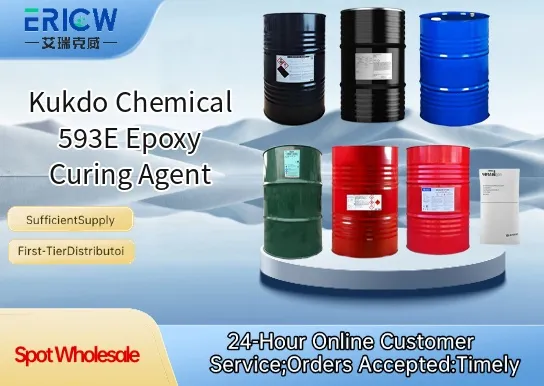
Fast-reacting aliphatic amine-based curing agent enabling rapid gelation and short demold times.
Excellent compatibility with standard liquid epoxy resins, ensuring homogeneous mixing and low viscosity processing.
Provides high mechanical strength and thermal resistance in cured epoxy systems.
Low volatility and reduced amine odor compared to conventional DETA-type hardeners, improving workplace safety.
Good moisture tolerance during application, supporting reliable performance under moderate humidity conditions.
Electrical potting and encapsulation compounds for transformers, sensors, and power modules.
Structural adhesives in automotive and aerospace assembly requiring fast fixture and high bond integrity.
High-performance flooring and coating systems for industrial facilities and cleanrooms.
Composite matrix resins for pultrusion and filament winding of fiberglass-reinforced profiles.
Repair mortars and anchoring grouts demanding rapid strength development and chemical resistance.
| Chemical Type | Aliphatic polyamine |
| Product Form | Liquid |
| Appearance | Clear to pale yellow liquid |
| Density (25°C) | 0.92–0.96 g/cm³ |
| Amine Value | 480–520 mg KOH/g |
| Viscosity (25°C) | 150–250 mPa·s |
| Reactivity Profile | Fast-curing at ambient temperature; accelerated at elevated temperatures |
| Storage Stability | 12 months in original sealed container at 5–25°C |
Q1: What is the primary chemical class and functional mechanism of Kukdo 593E?
A: Kukdo 593E is an aliphatic amine-based epoxy curing agent. It functions through nucleophilic addition to epoxide rings, enabling ambient- or elevated-temperature crosslinking with standard bisphenol-A and bisphenol-F epoxy resins.
Q2: Is Kukdo 593E suitable for low-VOC or high-solids coating formulations?
A: Yes — 593E is a low-viscosity, solvent-free liquid with negligible volatility, making it well-suited for high-solids, low-VOC, and solvent-free epoxy coatings and adhesives where regulatory compliance and application performance are critical.
Q3: How does 593E compare to conventional DETA or TETA in terms of pot life and film properties?
A: Compared to highly reactive aliphatic triamines like DETA or TETA, 593E offers extended working time (pot life) at ambient temperature while still delivering good hardness development, chemical resistance, and flexibility in the cured network — particularly beneficial for industrial maintenance and flooring applications.
Q4: Can 593E be used in moisture-sensitive or high-humidity environments?
A: While 593E exhibits lower sensitivity to ambient moisture than many primary amines, it remains hygroscopic and should be stored under dry conditions. Formulators targeting high-humidity application may consider partial substitution or post-cure protocols to ensure optimal cure integrity.
Q5: What is the typical dosage range for 593E in standard epoxy systems?
A: Dosage depends on formulation requirements and target performance, but 593E is typically used at low concentrations relative to resin weight — generally ranging from 0.1% to 2% by weight for catalytic applications, or higher when serving as a primary hardener, depending on epoxy equivalent weight and desired cure profile.
Contact With Us:
E-mail: wangxingqiang@ericwchem.com
Have a Questions? Call Us:
Add:
Building A1, Jiete Industrial Park, Huangpu District, Guangzhou City, Guangdong Province, China