English
 Español
 tiếng việt
 русский
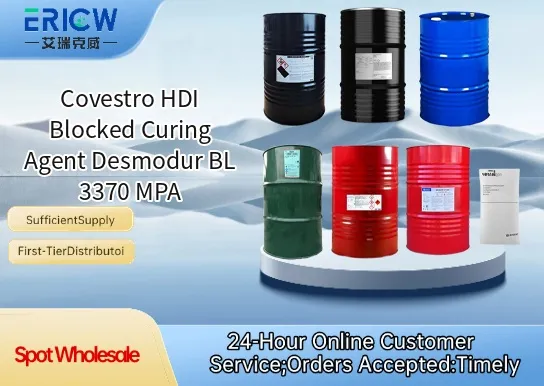
Thermally reversible blocked isocyanate based on hexamethylene diisocyanate (HDI), enabling low-temperature curing without catalysts.
Excellent storage stability at ambient temperature with suppressed premature reaction during formulation and processing.
Delivers high crosslink density and superior mechanical properties, including outstanding hardness, flexibility, and chemical resistance.
Compatible with hydroxyl-functional resins such as polyester, acrylic, and polyether polyols for versatile coating systems.
Low volatility and reduced handling risk compared to unblocked HDI prepolymers, supporting safer industrial operations.
Automotive OEM clearcoats and basecoats requiring high-gloss, chip-resistant finishes.
Industrial maintenance coatings for metal substrates in demanding environments.
Plastic coatings for automotive interior parts and consumer electronics housings.
Wood finishing systems where low-bake conditions and substrate compatibility are critical.
General-purpose two-component polyurethane coatings for architectural and agricultural equipment.
| Chemical Type | Blocked aliphatic isocyanate (HDI-based) |
| Product Form | Liquid |
| Appearance | Clear, pale yellow liquid |
| Primary Applications | Two-component polyurethane coatings, low-bake industrial finishes |
| Key Features | Thermal deblocking, ambient storage stability, catalyst-free cure capability |
| Benefits | Reduced VOC potential, improved pot life, enhanced film toughness and weatherability |
| Recommended Deblocing Temperature | 120–160 °C |
| Shelf Life (unopened, 25 °C) | 12 months |
Q1: What is the primary function of Desmodur BL 3370 MPA in coating formulations?
A: Desmodur BL 3370 MPA is a blocked aliphatic isocyanate curing agent designed to provide ambient-cure capability to hydroxyl-functional resins—enabling robust crosslinking without requiring elevated oven temperatures, while maintaining excellent UV stability and color retention.
Q2: How does the MPA blocking agent influence the deblocking temperature and handling safety?
A: The methyl propyl amine (MPA) blocking group provides a well-balanced deblocking profile, typically activating in the range of 120–140 °C. This offers improved pot life at ambient conditions and reduced volatility compared to lower-boiling blocking agents, enhancing workplace handling safety and formulation stability.
Q3: Which resin types are most commonly paired with Desmodur BL 3370 MPA?
A: It is widely used with polyester polyols, acrylic polyols, and hybrid hydroxyl-terminated resins in high-performance industrial and automotive refinish coatings, where low-temperature cure, hardness development, and chemical resistance are critical.
Q4: Can Desmodur BL 3370 MPA be used in solvent-free or high-solids systems?
A: Yes—it exhibits good compatibility and reactivity in medium-to-high solids solventborne systems and can be adapted for certain low-VOC or solvent-reduced formulations, though viscosity and compatibility should be verified during initial lab trials.
Q5: Is pre-drying or moisture exclusion required before use?
A: As with all isocyanate-based curing agents, Desmodur BL 3370 MPA is moisture-sensitive. Formulators should ensure substrates and equipment are dry, and storage containers should be kept tightly sealed under inert gas when not in use to prevent premature reaction with ambient humidity.
Contact With Us:
E-mail: wangxingqiang@ericwchem.com
Have a Questions? Call Us:
Add:
Building A1, Jiete Industrial Park, Huangpu District, Guangzhou City, Guangdong Province, China