English
 Español
 tiếng việt
 русский
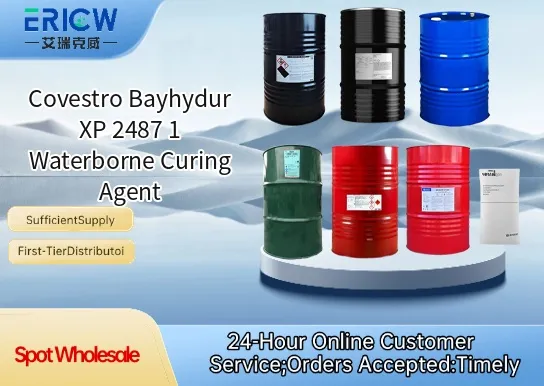
Low-VOC, waterborne aliphatic polyisocyanate crosslinker compliant with stringent global emissions regulations.
Excellent hydrolytic stability enabling extended pot life and reliable performance in aqueous two-component systems.
Enables high-gloss, scratch-resistant, and weather-stable coatings with superior UV resistance.
Compatible with a broad range of waterborne acrylic and polyurethane dispersions.
Facilitates fast ambient-cure or low-bake film formation without compromising flexibility or adhesion.
Waterborne industrial maintenance coatings for metal substrates.
High-performance wood coatings including furniture and flooring finishes.
Automotive refinish clearcoats and basecoats requiring low VOC and rapid dry-through.
Plastic coatings for automotive interior parts and consumer electronics housings.
Architectural and decorative coatings for interior applications demanding low odor and high durability.
| Chemical Type | Aliphatic polyisocyanate (HDI-based trimer) |
| Product Form | Waterborne dispersion |
| Appearance | Clear to slightly hazy, colorless to pale yellow liquid |
| Non-Volatile Content (wt.%) | Approx. 45–49% |
| pH Value | 7.0–8.5 |
| Viscosity (mPa·s, 23°C) | 150–350 |
| Storage Stability | ≥6 months at 5–30°C in sealed original container |
| Key Features | Low VOC, hydrolytically stable, ambient-curable, non-yellowing |
Q1: What is the primary function of Bayhydur XP 2487 1 in waterborne coating systems?
A: Bayhydur XP 2487 1 is a hydrophilically modified aliphatic polyisocyanate curing agent designed to react with waterborne polyols and dispersions. It enables the formation of durable, crosslinked polyurethane films with excellent gloss retention, chemical resistance, and mechanical performance—without requiring organic co-solvents.
Q2: Is Bayhydur XP 2487 1 compatible with standard waterborne acrylic or polyester polyol dispersions?
A: Yes—it is formulated for broad compatibility with common anionic and non-ionic waterborne polyol dispersions, including acrylics, polyesters, and hybrid systems. Optimal compatibility and pot life should be confirmed through small-scale formulation trials under application-relevant conditions.
Q3: How does Bayhydur XP 2487 1 differ from solvent-borne polyisocyanate curing agents?
A: Unlike conventional solvent-borne isocyanates, XP 2487 1 features built-in hydrophilic modification that allows stable dispersion in water without added surfactants or high levels of co-solvents. This supports lower VOC formulations while maintaining good reactivity, film formation, and storage stability in aqueous media.
Q4: What are typical handling and storage recommendations?
A: Store in tightly sealed original containers at temperatures between 5 °C and 30 °C, protected from moisture and direct sunlight. Avoid freezing. Once opened, minimize exposure to ambient humidity and use within recommended shelf life; always follow Covestro’s safety data sheet (SDS) for safe handling, ventilation, and PPE requirements.
Contact With Us:
E-mail: wangxingqiang@ericwchem.com
Have a Questions? Call Us:
Add:
Building A1, Jiete Industrial Park, Huangpu District, Guangzhou City, Guangdong Province, China