English
 Español
 tiếng việt
 русский
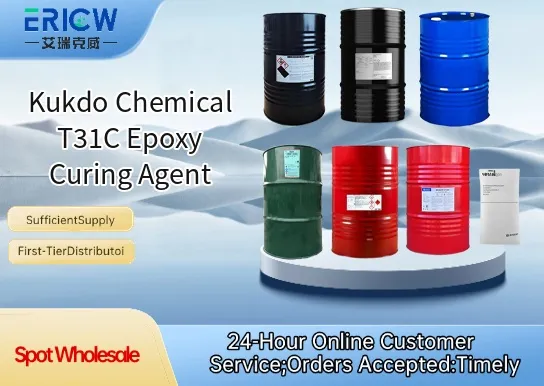
Fast-reacting aliphatic amine-based curing agent enabling rapid room-temperature cure of epoxy resins.
Excellent compatibility with standard bisphenol-A and bisphenol-F epoxy resins.
Low viscosity for easy metering, mixing, and improved wetting of fillers and reinforcements.
Good chemical resistance in cured systems, particularly against alkalis and solvents.
Low volatility and reduced amine odor compared to conventional aliphatic amines.
Structural adhesives for metal, composite, and concrete bonding.
Electrical encapsulants and potting compounds requiring fast turnaround.
Repair mortars and high-strength grouts for civil engineering applications.
Coating systems for industrial flooring and corrosion protection.
Wind turbine blade adhesive bonding and composite tooling resins.
| Chemical Type | Aliphatic polyamine adduct |
| Product Form | Liquid |
| Appearance | Pale yellow to amber clear liquid |
| Viscosity (25°C) | 200–400 cP |
| Amine Value | 380–420 mg KOH/g |
| Density (25°C) | 0.92–0.96 g/cm³ |
| Reactivity Profile | Room-temperature curable; gel time ~30–60 min (with DGEBA at 100 phr) |
| Primary Applications | Adhesives, coatings, composites, and repair mortars |
Q1: What is the primary function of T31C in epoxy systems?
A: T31C is a modified amine-based curing agent designed to initiate and accelerate the crosslinking reaction of epoxy resins, enabling rapid development of mechanical strength, chemical resistance, and thermal stability at ambient or mildly elevated temperatures.
Q2: Is T31C suitable for low-VOC or solvent-free formulations?
A: Yes — T31C is a liquid, low-viscosity curing agent with negligible volatile organic content, making it well-suited for high-solids, solvent-free, and environmentally compliant epoxy coatings, adhesives, and composites.
Q3: How does T31C compare to standard aliphatic amines in terms of pot life and cure speed?
A: T31C offers a balanced profile: longer working time than highly reactive aliphatic amines, yet faster ambient cure than many polyamide or aromatic amine alternatives — supporting efficient processing without compromising final performance.
Q4: Can T31C be used with common bisphenol-A and bisphenol-F epoxy resins?
A: Yes — T31C demonstrates broad compatibility with standard liquid and solid bisphenol-A and bisphenol-F epoxy resins, as well as novolac epoxies, and is frequently selected for structural adhesives, flooring systems, and protective coatings.
Q5: What handling precautions should be observed when working with T31C?
A: As with most amine-based curing agents, T31C may cause skin and eye irritation. Users should wear appropriate PPE — including nitrile gloves, safety goggles, and respiratory protection if mist or vapor is generated — and ensure adequate ventilation during handling and mixing.
Contact With Us:
E-mail: wangxingqiang@ericwchem.com
Have a Questions? Call Us:
Add:
Building A1, Jiete Industrial Park, Huangpu District, Guangzhou City, Guangdong Province, China