English
 Español
 tiếng việt
 русский
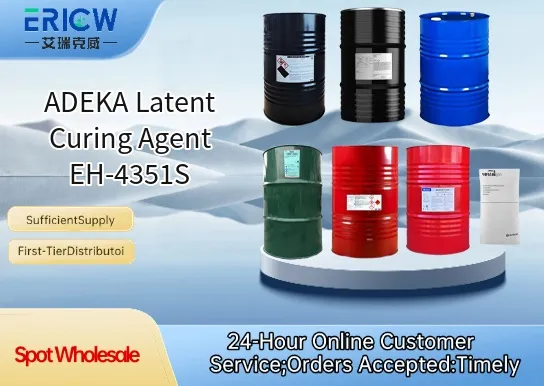
Highly latent at room temperature—enables extended pot life and excellent storage stability.
Activates rapidly upon thermal triggering (typically >100 °C), ensuring efficient epoxy resin curing.
Halogen-free formulation, supporting environmental compliance and RoHS/REACH requirements.
Delivers high glass transition temperature (Tg) and excellent mechanical properties in cured networks.
Low volatility and minimal odor—improves workplace safety and processing comfort.
Prepregs for aerospace and high-performance composites.
Encapsulants and molding compounds in power electronics and EV battery modules.
Structural adhesives requiring long shelf life and precise thermal activation.
Coatings for metal substrates demanding high crosslink density and chemical resistance.
3D printing resins (SLA/DLP) where controlled reactivity and low dark-cure are critical.
| Chemical Type | Latent imidazole derivative |
| Product Form | Powder |
| Appearance | White to off-white free-flowing powder |
| Primary Applications | Epoxy resin systems for composites, encapsulation, and adhesives |
| Key Features | Thermally activated, halogen-free, low volatility |
| Onset Activation Temperature | Approx. 105 °C (by DSC) |
| Storage Stability | ≥12 months at 25 °C in sealed container |
| Recommended Loading Range | 3–8 phr (parts per hundred resin) |
Q1: What is the primary function of EH-4351S in epoxy systems?
A: EH-4351S is a latent curing agent designed to provide extended pot life at ambient temperatures while enabling rapid, efficient crosslinking upon thermal activation—typically above 120 °C—making it suitable for one-component epoxy formulations requiring storage stability and controlled cure profiles.
Q2: Is EH-4351S compatible with standard bisphenol-A and bisphenol-F epoxy resins?
A: Yes, EH-4351S demonstrates broad compatibility with conventional liquid and solid bisphenol-based epoxy resins, as well as many novolac and multifunctional epoxies—though optimal performance should be verified through small-scale formulation trials under intended processing conditions.
Q3: How does EH-4351S compare to traditional dicyandiamide (DICY) in terms of handling and safety?
A: Unlike DICY, EH-4351S exhibits lower dust generation during handling and reduced sensitivity to moisture absorption, contributing to improved workplace safety and formulation consistency—however, standard industrial hygiene practices for chemical handling still apply.
Q4: What are typical processing conditions required to achieve full cure with EH-4351S?
A: Full cure is generally achieved with thermal treatment in the range of 130–170 °C for 15–60 minutes, depending on part geometry, thermal mass, and desired final properties—lower temperatures require longer dwell times, while higher temperatures may accelerate gelation and reduce working window.
Contact With Us:
E-mail: wangxingqiang@ericwchem.com
Have a Questions? Call Us:
Add:
Building A1, Jiete Industrial Park, Huangpu District, Guangzhou City, Guangdong Province, China