English
 Español
 tiếng việt
 русский
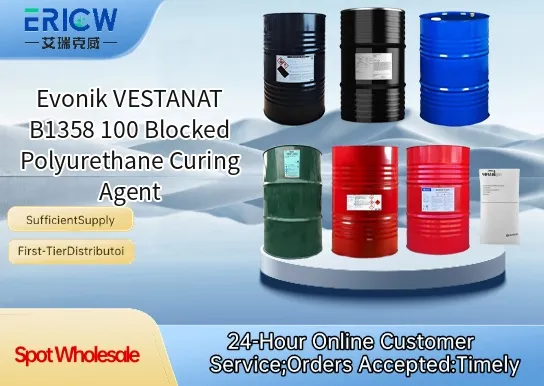
Highly reactive blocked isocyanate based on HDI (hexamethylene diisocyanate) with excellent storage stability.
Enables one-component (1K) polyurethane systems with low-temperature curing capability (typically 120–140 °C).
Delivers outstanding film hardness, chemical resistance, and weathering performance in final coatings.
Low volatility and minimal blocking agent emission during cure, supporting VOC-compliant formulations.
Excellent compatibility with hydroxyl-functional acrylics, polyesters, and alkyds for broad formulation flexibility.
Automotive OEM and refinish topcoats requiring high-gloss, durability, and rapid throughput.
Industrial maintenance coatings for metal substrates exposed to harsh environmental conditions.
Coil coatings demanding excellent formability, corrosion resistance, and bake efficiency.
Powder coating hybrid systems where enhanced crosslink density and surface quality are critical.
General-purpose high-performance 1K thermosetting coatings for appliances and architectural metal.
| Chemical Type | Blocked aliphatic polyisocyanate (HDI-based) |
| Product Form | Liquid |
| Appearance | Clear, pale yellow liquid |
| NCO Content (unblocked basis) | Approx. 14.5 wt-% |
| Blocking Agent | Caprolactam |
| Viscosity (25 °C) | Approx. 1,200–1,800 mPa·s |
| Density (20 °C) | Approx. 1.09–1.11 g/cm³ |
| Storage Stability (25 °C) | ≥12 months in sealed container |
Q1: What is the blocking agent used in VESTANAT B1358 100?
A: VESTANAT B1358 100 utilizes a proprietary phenolic blocking agent, selected for its thermal deblocking profile and compatibility with common polyol systems. The specific chemical identity is protected under Evonik’s intellectual property and not disclosed publicly.
Q2: At what temperature does deblocking typically occur?
A: Deblocking begins gradually above 120 °C and proceeds efficiently within the range of 130–160 °C, depending on formulation composition, film thickness, and heating rate. Full reactivity is generally achieved during standard industrial baking cycles.
Q3: Is VESTANAT B1358 100 compatible with hydroxyl-functional acrylics and polyesters?
A: Yes — it is specifically designed for two-component (2K) polyurethane systems based on OH-functional resins, including acrylics, polyesters, and alkyds. Compatibility and storage stability are excellent in solventborne formulations; waterborne adaptations may require evaluation of dispersion stability and pH sensitivity.
Q4: How does VESTANAT B1358 100 compare to traditional isocyanate curing agents in terms of pot life and handling safety?
A: As a blocked isocyanate, it offers significantly extended pot life at ambient temperatures and eliminates the need for strict moisture control or personal protective equipment against free NCO exposure during handling and mixing. Reactivity is only activated upon thermal treatment, enhancing workplace safety and process flexibility.
Contact With Us:
E-mail: wangxingqiang@ericwchem.com
Have a Questions? Call Us:
Add:
Building A1, Jiete Industrial Park, Huangpu District, Guangzhou City, Guangdong Province, China