English
 Español
 tiếng việt
 русский
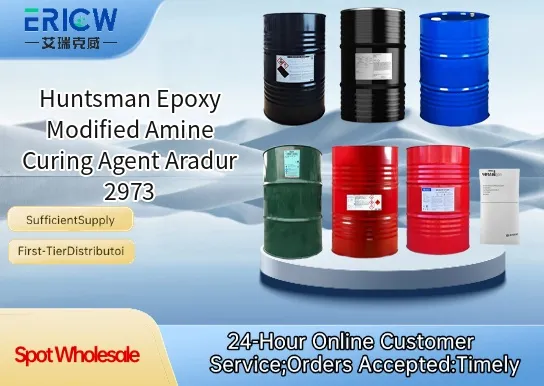
Low-viscosity liquid formulation enabling easy handling and homogeneous mixing with epoxy resins.
Fast-reacting modified amine chemistry delivering rapid gel time and early strength development at ambient temperatures.
Excellent adhesion to damp or marginally contaminated concrete and steel substrates.
Reduced exotherm compared to conventional aliphatic amines, supporting thicker-section castings and minimizing thermal stress.
Good chemical resistance post-cure, particularly against alkalis, solvents, and mild acids.
Industrial flooring systems requiring rapid return-to-service in warehouses and manufacturing facilities.
Concrete repair mortars and grouts for infrastructure rehabilitation projects.
Adhesives and structural bonding agents for metal-to-metal and metal-to-concrete assemblies.
Electrical encapsulation and potting compounds where controlled reactivity and low shrinkage are critical.
Marine and offshore protective coatings for splash zone and submerged steel structures.
| Chemical Type | Epoxy-modified aliphatic amine |
| Product Form | Low-viscosity liquid |
| Appearance | Pale yellow to amber clear liquid |
| Primary Applications | Ambient-cure epoxy systems for flooring, repair, bonding, and coating |
| Key Features | Fast ambient cure, low exotherm, damp-surface adhesion |
| Benefits | Rapid turnaround, reduced application downtime, improved substrate tolerance |
| Storage Stability | 12 months unopened at 15–25°C |
| Recommended Mixing Ratio (by weight) | Varies by epoxy resin; consult technical data sheet |
Q1: What is the primary function of Aradur 2973 in epoxy systems?
A: Aradur 2973 is an epoxy-modified amine curing agent designed to provide enhanced flexibility, improved adhesion to challenging substrates, and reduced sensitivity to moisture during cure—making it particularly suitable for demanding structural adhesive and coating applications.
Q2: Is Aradur 2973 compatible with standard bisphenol-A and bisphenol-F epoxy resins?
A: Yes, Aradur 2973 demonstrates broad compatibility with common liquid and solid bisphenol-based epoxy resins, as well as many novolac and cycloaliphatic epoxies. Compatibility and optimal performance should be verified through formulation testing under intended processing conditions.
Q3: How does Aradur 2973 compare to conventional aliphatic amines in terms of pot life and cure speed?
A: Due to its epoxy modification, Aradur 2973 typically offers extended pot life at ambient temperature compared to unmodified aliphatic amines, while still enabling efficient room-temperature or elevated-temperature cure profiles depending on formulation design and thermal input.
Q4: Can Aradur 2973 be used in food-contact or potable water applications?
A: Aradur 2973 is not pre-qualified for direct food-contact or potable water applications. Any use in such regulated environments requires full formulation evaluation, compliance verification with applicable regional regulations, and approval by relevant authorities prior to commercial deployment.
Q5: What handling precautions are recommended for Aradur 2973?
A: As with most amine-containing materials, appropriate personal protective equipment—including chemical-resistant gloves, eye protection, and adequate ventilation—should be used during handling. Avoid skin contact and inhalation of mists or vapors; refer to the Safety Data Sheet for comprehensive guidance.
Contact With Us:
E-mail: wangxingqiang@ericwchem.com
Have a Questions? Call Us:
Add:
Building A1, Jiete Industrial Park, Huangpu District, Guangzhou City, Guangdong Province, China