English
 Español
 tiếng việt
 русский
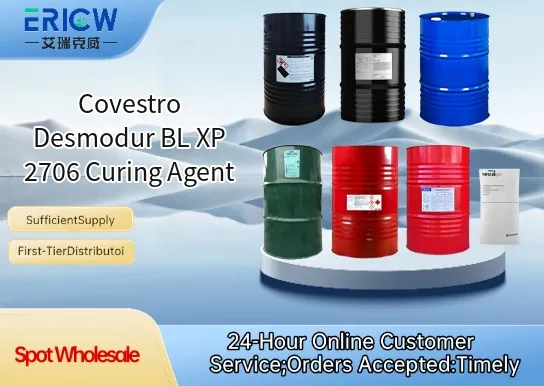
Aliphatic polyisocyanate-based curing agent offering excellent UV stability and color retention.
Low-viscosity liquid formulation enabling easy handling, precise metering, and efficient mixing with hydroxyl-functional resins.
Provides rapid ambient-cure performance without requiring elevated temperatures or catalysts.
Delivers outstanding chemical resistance, including to solvents, cleaning agents, and mild acids.
Compliant with REACH and registered under the EU CLP regulation for safe industrial use.
High-performance automotive clearcoats and topcoats requiring long-term gloss and weatherability.
Industrial maintenance coatings for machinery, rail vehicles, and agricultural equipment.
Architectural façade coatings exposed to intense sunlight and environmental stress.
Plastic coatings for exterior automotive trim and functional components.
Two-component (2K) polyurethane systems for premium wood and metal finishing.
| Chemical Type | Aliphatic polyisocyanate (hexamethylene diisocyanate–based) |
| Product Form | Liquid |
| Appearance | Clear, pale yellow liquid |
| NCO Content (wt %) | 15.8 – 16.2 |
| Viscosity at 25 °C (mPa·s) | 800 – 1,200 |
| Density at 20 °C (g/cm³) | 1.18 – 1.22 |
| Flash Point (°C, closed cup) | 145 – 155 |
| Storage Stability (unopened, 20 °C) | ≥ 12 months |
Q1: What is the primary chemical nature of Desmodur BL XP 2706?
A: Desmodur BL XP 2706 is an aliphatic polyisocyanate based on hexamethylene diisocyanate (HDI), modified to provide enhanced storage stability and controlled reactivity in two-component polyurethane systems.
Q2: Is Desmodur BL XP 2706 suitable for coatings requiring excellent UV resistance and gloss retention?
A: Yes — as an aliphatic isocyanate, it delivers outstanding weatherability, minimal yellowing, and long-term gloss retention, making it well-suited for high-performance exterior coatings such as automotive clearcoats, industrial maintenance finishes, and premium architectural coatings.
Q3: How does Desmodur BL XP 2706 compare to standard HDI trimer in terms of viscosity and handling?
A: It exhibits lower viscosity than conventional HDI trimers, facilitating easier handling, improved mixing efficiency with polyols, and better compatibility in solvent-borne and high-solids formulations without requiring excessive dilution.
Q4: What types of polyols is Desmodur BL XP 2706 typically formulated with?
A: It is commonly paired with hydroxyl-functional acrylics, polyesters, and polycarbonate polyols in 2K PU systems — particularly where a balance of hardness, flexibility, and chemical resistance is required.
Q5: What is the typical dosage range when using Desmodur BL XP 2706 as a curing agent?
A: Dosage depends on formulation requirements and the hydroxyl value of the resin component, but it is generally used at low concentrations relative to the total solids — often within the range of 0.1% to 2% by weight in crosslinker-rich systems, or stoichiometrically adjusted to achieve target NCO:OH ratios.
Contact With Us:
E-mail: wangxingqiang@ericwchem.com
Have a Questions? Call Us:
Add:
Building A1, Jiete Industrial Park, Huangpu District, Guangzhou City, Guangdong Province, China