English
 Español
 tiếng việt
 русский
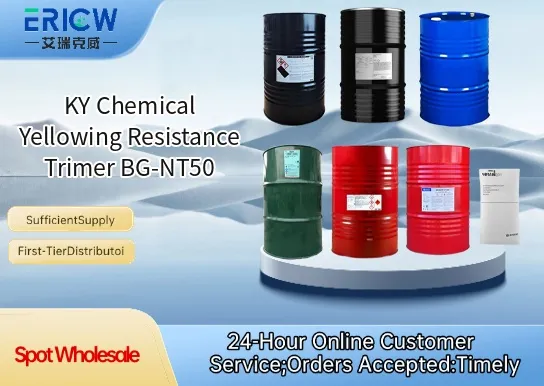
Highly effective yellowing inhibition for polyurethane and acrylic coatings exposed to UV, heat, and NOx environments.
Non-migrating trimeric structure ensures long-term stability and compatibility with diverse resin systems.
Low volatility and excellent thermal stability up to 220°C during curing and processing.
Halogen-free formulation compliant with RoHS and REACH regulatory requirements.
Enhances lightfastness without compromising film flexibility or adhesion performance.
Automotive interior trim coatings requiring long-term color retention.
High-gloss furniture and wood finishes subject to indoor UV exposure.
Textile coating binders for synthetic leather and technical fabrics.
Electronics housing coatings where aesthetic consistency is critical.
Architectural elastomeric roof coatings exposed to thermal cycling and atmospheric pollutants.
| Chemical Type | Trimeric hindered amine light stabilizer (HALS) derivative |
| Product Form | Powder |
| Appearance | Off-white to pale yellow free-flowing powder |
| Primary Applications | PU, acrylic, and hybrid coating systems |
| Key Features | UV/NOx/heat-induced yellowing resistance |
| Benefits | Extended service life, reduced maintenance, improved aesthetic durability |
| Storage Conditions | Store in cool, dry place below 30°C; protect from moisture and direct sunlight |
| Regulatory Compliance | REACH registered; RoHS compliant; no SVHCs above threshold |
Q1: What is the primary function of BG-NT50 in polymer systems?
A: BG-NT50 is a specialized yellowing resistance trimer designed to inhibit photo-oxidative degradation and thermal discoloration in light-sensitive polymers—particularly polyurethanes, acrylics, and certain thermoplastic elastomers—by stabilizing chromophores formed during processing or long-term exposure.
Q2: Is BG-NT50 compatible with common UV absorbers and hindered amine light stabilizers (HALS)?
A: Yes, BG-NT50 is formulated for synergistic use with conventional UV absorbers (e.g., benzotriazoles) and HALS systems. It does not interfere with their stabilization mechanisms and is often incorporated into multi-stabilizer packages for enhanced long-term color retention.
Q3: How is BG-NT50 typically incorporated into formulations?
A: BG-NT50 is supplied as a low-viscosity liquid and is readily dispersible in most organic solvents and reactive polymer precursors. It is generally added during the compounding or pre-polymer stage, and dosage depends on formulation requirements—typically used at low concentrations relative to the base polymer mass.
Q4: Does BG-NT50 affect the mechanical properties or cure kinetics of polyurethane systems?
A: When used within recommended dosage ranges, BG-NT50 exhibits minimal impact on tensile strength, elongation, or crosslink density. It is non-reactive with isocyanates or hydroxyl groups under standard processing conditions and does not significantly delay or accelerate gel time in typical PU formulations.
Contact With Us:
E-mail: wangxingqiang@ericwchem.com
Have a Questions? Call Us:
Add:
Building A1, Jiete Industrial Park, Huangpu District, Guangzhou City, Guangdong Province, China