English
 Español
 tiếng việt
 русский
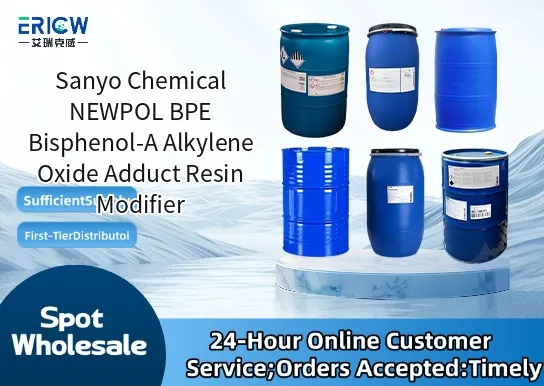
Enhances thermal stability and long-term heat resistance in thermoset and thermoplastic resin systems.
Improves adhesion to metallic and composite substrates without requiring surface priming.
Offers excellent compatibility with epoxy, phenolic, and polyurethane resins for homogeneous blending.
Reduces internal stress and microcracking in cured resin matrices under thermal cycling conditions.
Provides low volatility and minimal outgassing—suitable for high-reliability electronic encapsulation applications.
High-performance epoxy molding compounds for semiconductor packaging.
Thermally stable laminating resins used in printed circuit board (PCB) prepregs.
Adhesive formulations for aerospace structural bonding and composite repair.
Encapsulants and potting compounds for power electronics and EV battery modules.
Modified phenolic resins for friction materials in automotive brake pads.
| Chemical Type | Bisphenol-A-based alkylene oxide adduct (non-ionic) |
| Product Form | Pale yellow to amber viscous liquid |
| Appearance | Clear, homogeneous liquid at room temperature |
| Primary Applications | Resin modification for epoxy, phenolic, and polyurethane systems |
| Key Features | Thermal stability enhancer, adhesion promoter, stress reliever |
| Benefits | Improved Tg retention, reduced coefficient of thermal expansion (CTE), enhanced interfacial cohesion |
| Storage Conditions | Store in sealed containers at 10–30°C; protect from moisture and direct sunlight |
| Handling Precautions | Use in well-ventilated areas; refer to SDS for PPE and safe handling guidance |
Contact With Us:
E-mail: wangxingqiang@ericwchem.com
Have a Questions? Call Us:
Add:
Building A1, Jiete Industrial Park, Huangpu District, Guangzhou City, Guangdong Province, China