English
 Español
 tiếng việt
 русский
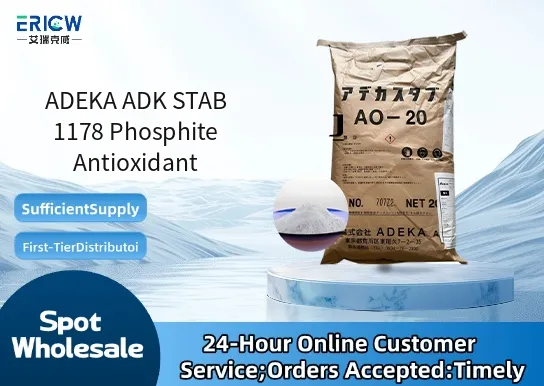
Highly effective hydroperoxide decomposer for enhanced polymer stabilization during processing and long-term service life.
Excellent compatibility with polyolefins, engineering plastics, and elastomers without blooming or plate-out issues.
Thermally stable up to 300 °C, supporting high-temperature extrusion, injection molding, and blow molding processes.
Low volatility and minimal odor, contributing to improved workplace safety and reduced VOC emissions.
Synergistic performance when combined with hindered phenolic antioxidants (e.g., ADK STAB AO-60), enabling optimized stabilization packages.
Polypropylene (PP) fibers, tapes, and automotive interior components.
High-density polyethylene (HDPE) pipes, fuel tanks, and rotational molded parts.
Thermoplastic elastomers (TPEs) used in seals, grips, and medical tubing.
Engineering thermoplastics including polybutylene terephthalate (PBT) and polyamide (PA) compounds.
Recycled polyolefin formulations requiring robust melt stabilization and color retention.
| Chemical Type | Tris(2,4-di-tert-butylphenyl) phosphite |
| Product Form | Free-flowing white to off-white crystalline powder |
| Appearance | Crystalline solid, free from visible impurities |
| Melting Point | 195–205 °C (determined by DSC) |
| Assay (by HPLC) | ≥ 98.0% |
| Volatility (180 °C, 2 h) | ≤ 1.0% loss |
| Primary Applications | Polyolefins, engineering plastics, TPEs, recycled resins |
| Key Features | Hydroperoxide decomposition, thermal stability, low volatility, synergism with phenolics |
Contact With Us:
E-mail: wangxingqiang@ericwchem.com
Have a Questions? Call Us:
Add:
Building A1, Jiete Industrial Park, Huangpu District, Guangzhou City, Guangdong Province, China