English
 Español
 tiếng việt
 русский
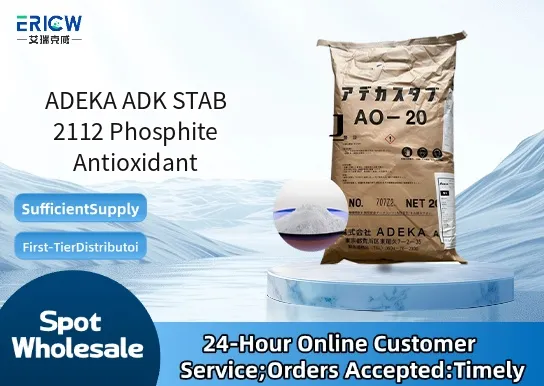
Highly effective secondary antioxidant that hydrolyzes and decomposes hydroperoxides without generating acidic by-products.
Excellent thermal stability suitable for high-temperature polymer processing, including injection molding and extrusion.
Low volatility and minimal migration, ensuring long-term stabilization performance in demanding applications.
Compatible with primary antioxidants (e.g., hindered phenols) and other additives commonly used in polyolefin formulations.
Non-staining and non-discoloring—preserves clarity and color integrity in transparent or light-colored polymers.
Polypropylene (PP) homopolymers and copolymers for automotive interior parts and durable goods.
Polyethylene (PE), including HDPE and LLDPE, used in blow-molded containers and rotational molding.
Thermoplastic elastomers (TPEs) requiring high melt stability and low extractables.
Fibers and monofilaments where long-term oxidative resistance during heat-setting is critical.
Recycled polyolefin blends, where enhanced stabilization compensates for polymer degradation history.
| Chemical Type | Tris(2,4-di-tert-butylphenyl) phosphite |
| Product Form | Free-flowing white to off-white crystalline powder |
| Appearance | White to pale yellow crystalline solid |
| Melting Point | 190–195 °C (by DSC) |
| Assay (by HPLC) | ≥ 99.0% |
| Residue on Ignition | ≤ 0.1% |
| Heavy Metals (as Pb) | ≤ 10 ppm |
| Primary Applications | Polyolefins, TPEs, fibers, recycled polymer systems |
Contact With Us:
E-mail: wangxingqiang@ericwchem.com
Have a Questions? Call Us:
Add:
Building A1, Jiete Industrial Park, Huangpu District, Guangzhou City, Guangdong Province, China