English
 Español
 tiếng việt
 русский
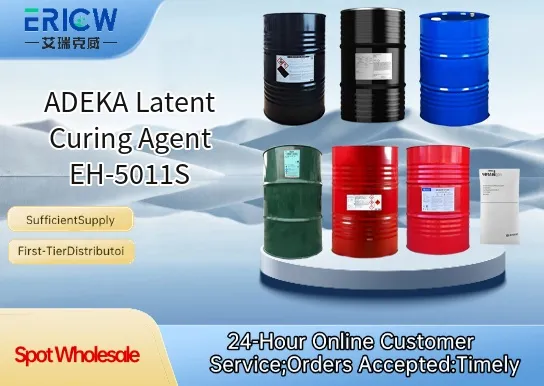
High-latency epoxy curing agent enabling extended pot life at ambient temperature.
Activates rapidly upon heating (typically >120 °C), ensuring precise processing control in thermal cure cycles.
Delivers excellent mechanical properties and thermal stability in cured epoxy resins.
Low volatility and minimal odor, supporting safer handling and improved workplace compliance.
Compatible with standard diglycidyl ether of bisphenol-A (DGEBA) and multifunctional epoxy resins.
Prepregs for aerospace and high-performance composites.
Electrical encapsulants and potting compounds for power electronics.
Structural adhesives requiring shelf-stable one-component formulation.
Coating systems for metal substrates demanding high crosslink density and chemical resistance.
3D printing resins where thermal-triggered polymerization enables layer-by-layer precision.
| Chemical Type | Modified imidazole derivative |
| Product Form | Powder |
| Appearance | Off-white to light yellow free-flowing powder |
| Primary Applications | Epoxy resin systems requiring latent thermal curing |
| Key Features | Latent reactivity, low-temperature storage stability, sharp activation profile |
| Recommended Cure Schedule | 150–180 °C for 30–60 minutes |
| Shelf Life (unopened, 25 °C) | 12 months |
| Handling Precautions | Avoid inhalation of dust; use in well-ventilated areas with appropriate PPE |
Q1: What is the primary function of EH-5011S in epoxy systems?
A: EH-5011S is a latent curing agent designed to provide extended pot life at ambient temperatures while enabling rapid and efficient cure upon thermal activation—typically above 120 °C. It supports high-gloss, low-color cured films with excellent chemical resistance and mechanical integrity.
Q2: How does EH-5011S compare to conventional amine-based hardeners in terms of handling and safety?
A: Unlike many reactive amines, EH-5011S exhibits significantly lower volatility and reduced skin sensitization potential due to its chemically stabilized, non-volatile latent structure. It offers improved workplace handling and longer shelf stability in formulated epoxy resins without premature reaction.
Q3: Which epoxy resin types is EH-5011S most commonly used with?
A: EH-5011S demonstrates broad compatibility with standard liquid and solid bisphenol-A and bisphenol-F epoxy resins, as well as novolac epoxies. It is especially effective in high-performance powder coatings, electrical encapsulants, and structural adhesives requiring precise thermal control of cure onset.
Q4: What are the recommended storage conditions for EH-5011S?
A: Store in original sealed containers under cool, dry conditions—ideally below 30 °C and protected from moisture and direct sunlight. Prolonged exposure to elevated temperature or humidity may gradually reduce latency performance over time.
Q5: Can EH-5011S be blended with other curing agents or accelerators?
A: Yes—EH-5011S can be co-formulated with certain tertiary amines or imidazoles to fine-tune cure profile and onset temperature, though compatibility and latency retention must be verified experimentally for each specific system. Blending is not recommended without prior small-scale validation.
Contact With Us:
E-mail: wangxingqiang@ericwchem.com
Have a Questions? Call Us:
Add:
Building A1, Jiete Industrial Park, Huangpu District, Guangzhou City, Guangdong Province, China