English
 Español
 tiếng việt
 русский
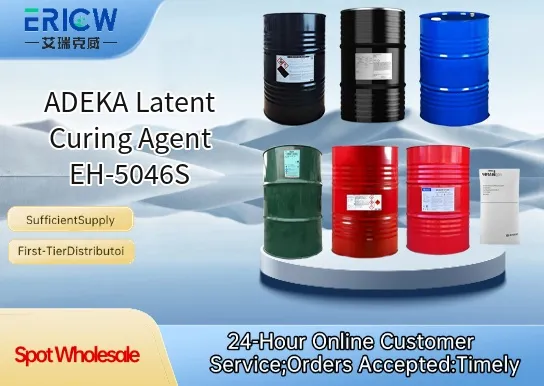
Highly latent at room temperature—enables extended pot life and ambient storage stability.
Activates rapidly upon thermal triggering (typically >120°C), delivering efficient epoxy resin curing.
Halogen-free formulation compliant with RoHS and REACH regulatory requirements.
Excellent compatibility with standard bisphenol-A and novolac epoxy resins.
Low volatility and minimal odor—supports safer handling in industrial environments.
Electronics encapsulation and potting compounds for PCB protection.
Structural adhesives requiring delayed cure and precise process control.
Prepregs and composite laminates for aerospace and automotive components.
Coating systems demanding high crosslink density and chemical resistance.
3D printing resins where thermal-triggered, low-shrinkage polymerization is critical.
| Chemical Type | Latent imidazole derivative |
| Product Form | Powder |
| Appearance | White to off-white free-flowing powder |
| Primary Applications | Epoxy resin curing agent for high-performance composites and electronics |
| Key Features | Thermally activated, halogen-free, low volatility |
| Storage Conditions | Store sealed under dry conditions at 5–30°C |
| Solubility | Soluble in common epoxy diluents (e.g., DGEBA, phenyl glycidyl ether) |
| Onset Activation Temperature | Approx. 120°C (DSC, 10°C/min) |
Q1: What is the primary function of EH-5046S in epoxy systems?
A: EH-5046S is a latent amine-based curing agent designed to provide extended pot life at ambient temperatures while enabling rapid, efficient cure upon thermal activation—typically above 120 °C. It supports high-gloss, low-color cured films with excellent chemical and thermal resistance.
Q2: How does EH-5046S compare to conventional dicyandiamide (DICY) in terms of handling and reactivity?
A: Unlike DICY, EH-5046S offers improved solubility in common epoxy resins and reduced dust generation during handling. Its latency profile is more consistent across resin types, and it typically initiates cure at lower onset temperatures than standard DICY formulations—without requiring complex accelerators in many cases.
Q3: Is EH-5046S suitable for powder coating applications?
A: Yes—EH-5046S is widely used in thermosetting powder coatings due to its excellent storage stability, low volatility, and clean thermal decomposition profile. It delivers uniform crosslinking without blooming or gassing issues commonly associated with some latent amines.
Q4: What are typical dosage guidelines for EH-5046S in epoxy formulations?
A: Dosage depends on the epoxy equivalent weight, desired cure schedule, and performance targets—but EH-5046S is generally used at low concentrations, typically ranging from 0.1% to 2% by weight relative to the epoxy resin. Optimization through small-scale thermal analysis (e.g., DSC) and rheological testing is recommended for each specific system.
Q5: Does EH-5046S require post-cure to achieve full performance?
A: Full crosslink density and optimal mechanical/chemical resistance are generally achieved after a standard thermal cure cycle (e.g., 15–30 minutes at 140–160 °C). In most industrial applications, no additional post-cure step is required—though extended dwell times may further enhance long-term durability in demanding environments.
Contact With Us:
E-mail: wangxingqiang@ericwchem.com
Have a Questions? Call Us:
Add:
Building A1, Jiete Industrial Park, Huangpu District, Guangzhou City, Guangdong Province, China