English
 Español
 tiếng việt
 русский
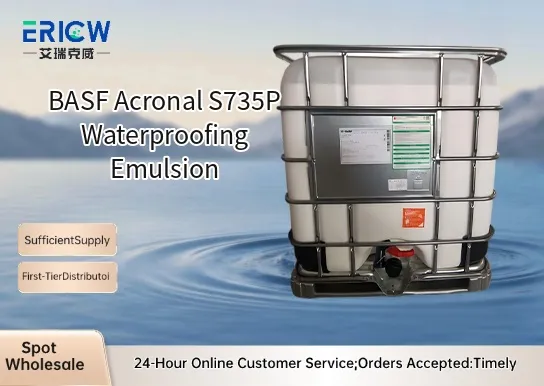
High-performance acrylic copolymer emulsion specifically engineered for durable, flexible waterproofing membranes.
Excellent adhesion to diverse substrates including concrete, cementitious renders, and aged bituminous surfaces.
Outstanding UV resistance and long-term weathering stability without chalking or embrittlement.
Low-VOC formulation compliant with stringent global environmental and occupational health regulations.
Good film-forming capability at ambient temperatures, enabling reliable application in variable climatic conditions.
Waterproofing layer in above-ground and below-ground concrete structures (e.g., basements, balconies, terraces).
Key binder in cement-based polymer-modified waterproofing slurries and coatings.
Component in flexible, crack-bridging liquid-applied membranes for flat roofs and podium decks.
Formulation base for high-durability tile adhesives and grouts requiring enhanced water resistance.
| Chemical Type | Acrylic copolymer emulsion |
| Product Form | White to slightly bluish, viscous liquid |
| Appearance | Homogeneous, free of lumps and sediment |
| Primary Applications | Polymer-modified cementitious waterproofing systems |
| Key Features | Flexibility, alkali resistance, low-temperature film formation |
| Benefits | Improved cohesion, reduced cracking, extended service life under cyclic wet/dry exposure |
| pH (at 20 °C) | 7.5 – 8.5 |
| Minimum Film Formation Temperature (MFFT) | ≈ 0 °C |
Contact With Us:
E-mail: wangxingqiang@ericwchem.com
Have a Questions? Call Us:
Add:
Building A1, Jiete Industrial Park, Huangpu District, Guangzhou City, Guangdong Province, China