English
 Español
 tiếng việt
 русский
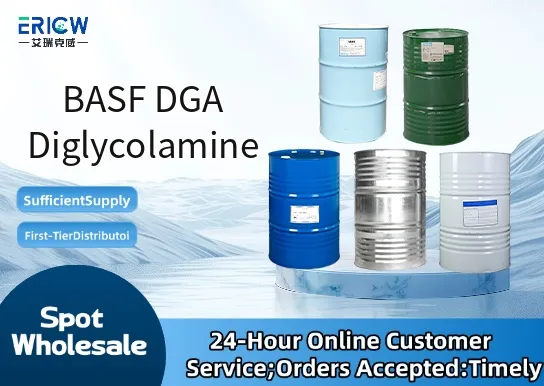
High selectivity for acid gas removal, especially CO₂ and H₂S, under low-pressure and low-concentration conditions.
Lower regeneration energy requirement compared to conventional amines such as MEA or DEA.
Excellent thermal and chemical stability in amine-based gas treating systems.
Reduced solvent degradation and foaming tendency, supporting long-term operational reliability.
Compatible with standard carbon steel equipment when operated within recommended pH and temperature ranges.
Natural gas sweetening for pipeline specification compliance.
Biogas upgrading to produce renewable natural gas (RNG).
CO₂ capture from industrial flue gases and syngas streams.
Refinery fuel gas treatment to meet sulfur specifications.
Ammonia plant feed gas purification to protect catalysts from acid gas poisoning.
| Chemical Type | Diglycolamine (DGA), N,N-bis(2-hydroxyethyl)glycine |
| Product Form | Liquid |
| Appearance | Clear, colorless to pale yellow liquid |
| Primary Applications | Acid gas removal (CO₂/H₂S) in gas treating processes |
| Key Features | High absorption capacity, low volatility, low corrosion potential |
| Benefits | Energy-efficient regeneration, extended solvent life, reduced maintenance |
| Molecular Weight | 135.15 g/mol |
| Boiling Point (at 760 mmHg) | Decomposes before boiling; stable up to ~180 °C |
Contact With Us:
E-mail: wangxingqiang@ericwchem.com
Have a Questions? Call Us:
Add:
Building A1, Jiete Industrial Park, Huangpu District, Guangzhou City, Guangdong Province, China