English
 Español
 tiếng việt
 русский
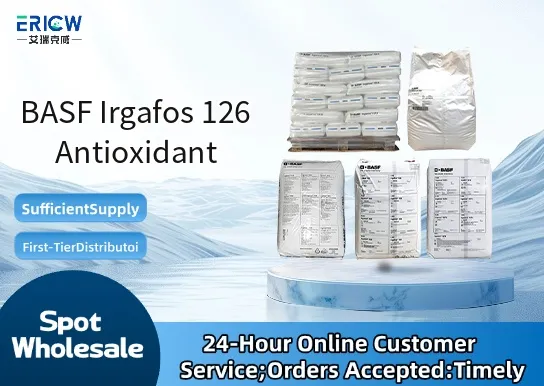
Highly effective secondary antioxidant based on phosphite chemistry for hydroperoxide decomposition.
Excellent thermal stability and low volatility, supporting high-temperature polymer processing.
Good compatibility with polyolefins, engineering plastics, and elastomers without blooming or migration.
Synergistic performance when combined with primary antioxidants such as hindered phenols (e.g., Irganox 1010).
Low color formation during processing, preserving clarity and aesthetic quality in final products.
Polypropylene (PP) fibers and nonwovens for hygiene and medical applications.
Polyethylene (PE) films used in packaging and agricultural mulch.
Automotive interior components including PP-based dashboards and trim parts.
Injection-molded engineering plastic compounds for electrical and electronic housings.
Recycled polyolefin formulations requiring stabilization against thermo-oxidative degradation.
| Chemical Type | Tris(2,4-di-tert-butylphenyl) phosphite |
| Product Form | White to off-white crystalline powder |
| Appearance | Free-flowing granular or powdered solid |
| Primary Applications | Polyolefins (PP, PE), engineering thermoplastics, elastomers |
| Key Features | Secondary antioxidant, hydroperoxide decomposer, low volatility |
| Benefits | Extended melt stability, reduced discoloration, improved long-term aging resistance |
| Molecular Weight | 734.9 g/mol |
| Storage Conditions | Store in cool, dry place under inert atmosphere; protect from moisture and UV light |
Contact With Us:
E-mail: wangxingqiang@ericwchem.com
Have a Questions? Call Us:
Add:
Building A1, Jiete Industrial Park, Huangpu District, Guangzhou City, Guangdong Province, China