English
 Español
 tiếng việt
 русский
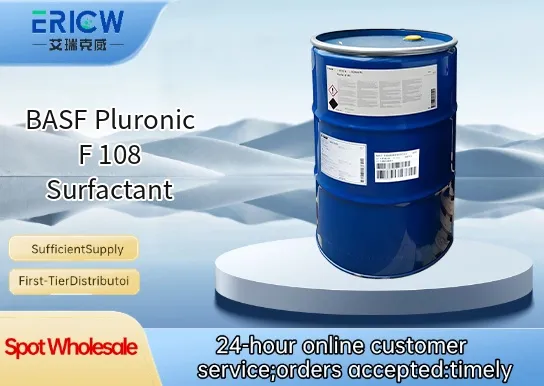
Tri-block copolymer structure (PEO–PPO–PEO) enabling excellent temperature-responsive micellization behavior.
High molecular weight (~14,600 g/mol) providing superior steric stabilization in colloidal and nanoparticle systems.
Non-ionic, low toxicity profile compliant with ICH Q3C guidelines for pharmaceutical excipient use.
Outstanding solubilizing capacity for hydrophobic actives, including poorly water-soluble APIs and fragrances.
Good thermal and pH stability across broad processing conditions (pH 3–11, up to 60 °C).
Stabilizer in injectable nanomedicine formulations (e.g., polymeric micelles, liposomes, and protein therapeutics).
Emulsifier and viscosity modifier in high-end personal care emulsions and cleansing gels.
Dispersing agent for ceramic slurries and advanced battery electrode coatings.
Solubilizer and crystallization inhibitor in pharmaceutical solid dispersion and amorphous formulation development.
Surface modifier for biomedical device coatings requiring non-fouling and biocompatible interfaces.
| Chemical Type | Non-ionic triblock copolymer (poly(ethylene oxide)-b-poly(propylene oxide)-b-poly(ethylene oxide)) |
| Product Form | White to off-white flake or powder |
| Appearance | Free-flowing, hygroscopic solid |
| Primary Applications | Pharmaceutical excipient, nanocarrier stabilizer, emulsion stabilizer, solubilizer |
| Key Features | Thermo-responsive micelle formation, low CMC (~0.005 wt%), high HLB (~22) |
| Benefits | Enhanced drug loading, improved formulation stability, reduced interfacial tension, GRAS-eligible for select applications |
| Regulatory Status | Complies with USP/NF, Ph. Eur., and JP monographs for Poloxamer 188 analogues; listed in FDA Inactive Ingredients Guide (IV route) |
Q1: What is the primary functional role of Pluronic F 108 in formulations?
A: Pluronic F 108 functions primarily as a nonionic triblock copolymer surfactant and stabilizer, offering strong steric stabilization in aqueous dispersions, emulsions, and nanoparticle systems. Its high molecular weight and PEO-PPO-PEO architecture provide excellent surface activity and colloidal stabilization, particularly in demanding applications such as drug delivery carriers and polymer micelles.
Q2: Is Pluronic F 108 suitable for pharmaceutical or biomedical use?
A: Pluronic F 108 is widely used in research and development of pharmaceutical and biomedical formulations, including solubilization of hydrophobic actives and stabilization of nanocarriers. While it is not pre-approved for all regulatory pathways, BASF provides technical-grade material suitable for early-stage development; final regulatory acceptance depends on the specific application, manufacturing controls, and intended route of administration.
Q3: How does temperature affect the behavior of Pluronic F 108 in solution?
A: Pluronic F 108 exhibits thermoresponsive behavior: it remains fully soluble at low temperatures but undergoes micellization and may show increased viscosity or gelation upon heating, depending on concentration and formulation matrix. This reversible thermal transition supports its use in stimuli-responsive delivery systems and temperature-triggered release applications.
Q4: What are typical dosage ranges for Pluronic F 108 in industrial applications?
A: Dosage varies significantly by application, but Pluronic F 108 is typically used at low concentrations—generally ranging from 0.1% to 2% by weight—depending on the required level of stabilization, interfacial coverage, or micelle formation. Optimization is recommended through small-scale testing under representative process conditions.
Q5: Can Pluronic F 108 be blended with other surfactants or polymers?
A: Yes, Pluronic F 108 is generally compatible with a broad range of nonionic, anionic, and cationic surfactants, as well as many water-soluble polymers. Synergistic effects—such as enhanced stability or modified rheology—are often observed in blends, though compatibility should be verified experimentally for each specific system due to potential interactions affecting micellization or phase behavior.
Contact With Us:
E-mail: wangxingqiang@ericwchem.com
Have a Questions? Call Us:
Add:
Building A1, Jiete Industrial Park, Huangpu District, Guangzhou City, Guangdong Province, China