English
 Español
 tiếng việt
 русский
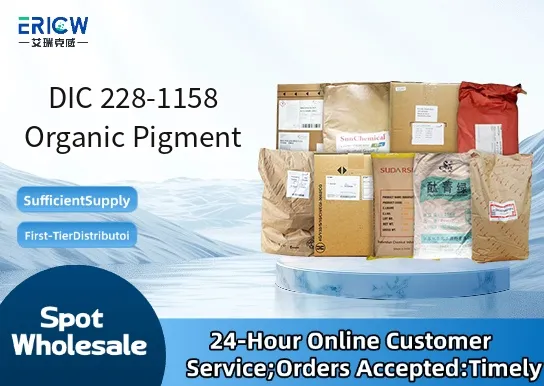
High chroma and excellent color strength in both solvent-based and water-based systems.
Outstanding thermal stability up to 200°C, suitable for high-temperature processing.
Good lightfastness (Grade 7–8 per ISO 105-B02) and weather resistance in outdoor applications.
Excellent dispersion stability with low viscosity build-up in pigment concentrates.
Low heavy metal content, compliant with major global regulatory frameworks including REACH and RoHS.
Automotive coatings (basecoat and clearcoat systems).
Industrial coil coatings and appliance finishes.
Plastic coloration for polyolefins and engineering resins.
High-performance inks for packaging and labeling.
Architectural and decorative paints requiring durable color performance.
| Chemical Type | Quinacridone derivative |
| Product Form | Fine dry powder |
| Appearance | Reddish-violet free-flowing powder |
| Primary Applications | Coatings, plastics, inks |
| Key Features | High transparency, good migration resistance |
| Benefits | Consistent batch-to-batch color match and rheology control |
| Recommended Dispersants | Polymeric dispersants (e.g., DISPERBYK®-190) |
| Storage Conditions | Store in cool, dry place; protect from moisture and direct sunlight |
Q1: What is the primary chemical class and typical hue profile of DIC 228-1158?
A: DIC 228-1158 is a high-performance quinacridone-based organic pigment, delivering strong violet-red to bluish-red shades with excellent chroma and clean undertones. Its molecular structure supports superior lightfastness and weather resistance in demanding applications.
Q2: Is DIC 228-1158 suitable for use in food-contact plastics or packaging inks?
A: DIC 228-1158 is not pre-approved for direct food-contact applications under major global regulatory frameworks. It may be considered for indirect contact or non-migrating systems—subject to full formulation evaluation, migration testing, and compliance verification by the end-user according to applicable regional requirements.
Q3: How does DIC 228-1158 perform in high-temperature polymer processing?
A: This pigment demonstrates good thermal stability up to approximately 280–300 °C, making it suitable for processing in polyolefins, polystyrene, and certain engineering thermoplastics. Performance at elevated temperatures depends on residence time, shear conditions, and matrix compatibility—pre-testing under actual process conditions is recommended.
Q4: What dispersion methods are recommended to achieve optimal color development and stability?
A: Optimal dispersion is achieved using high-shear compounding or extrusion in polymer melts, or with high-speed dispersers and bead mills in liquid systems. Pre-wetting and controlled temperature ramping during dispersion help minimize agglomeration and maximize color strength and gloss retention.
Contact With Us:
E-mail: wangxingqiang@ericwchem.com
Have a Questions? Call Us:
Add:
Building A1, Jiete Industrial Park, Huangpu District, Guangzhou City, Guangdong Province, China