English
 Español
 tiếng việt
 русский
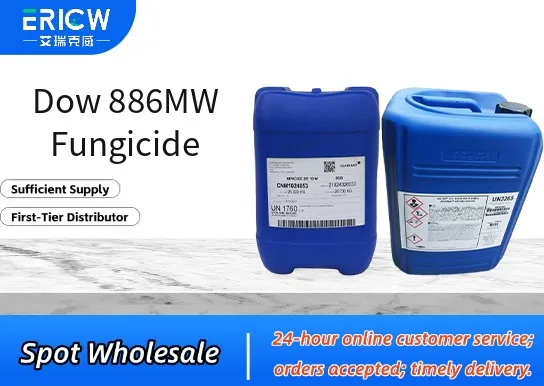
Broad-spectrum activity against key ascomycete and basidiomycete pathogens, including powdery mildew, rusts, and leaf spots.
Systemic translaminar movement ensures both protective and curative action on treated foliage.
Low application rates with extended residual control, supporting sustainable use patterns and reduced environmental load.
Compatible with major adjuvants and commonly used insecticides and fertilizers in integrated crop protection programs.
Minimal risk of phytotoxicity on labeled crops under recommended use conditions.
Vineyards – control of Uncinula necator (grape powdery mildew).
Apple orchards – management of Venturia inaequalis (apple scab) and Podosphaera leucotricha (powdery mildew).
Wheat and barley fields – suppression of Puccinia spp. (rusts) and Blumeria graminis (powdery mildew).
Strawberry production – protection against Podosphaera aphanis (strawberry powdery mildew).
Protected horticulture (greenhouses) – disease control in cucurbits and solanaceous crops.
| Chemical Type | Triazole fungicide (active ingredient: difenoconazole) |
| Product Form | Emulsifiable concentrate (EC) |
| Appearance | Amber to light brown homogeneous liquid |
| Active Ingredient Content | 250 g/L difenoconazole |
| Density (20 °C) | Approx. 1.05–1.10 g/mL |
| pH Range (1% aqueous solution) | 6.0–7.5 |
| Solubility in Water | Partially miscible; forms stable emulsion upon dilution |
| Storage Stability | ≥24 months at 5–30 °C in original unopened container |
Q1: What is the primary mode of action of Dow 886MW Fungicide?
A: Dow 886MW Fungicide functions as a broad-spectrum protective and curative fungicide, primarily inhibiting fungal cell wall synthesis and disrupting membrane integrity. Its activity is effective against a range of economically important plant pathogenic fungi, particularly in industrial coatings and non-agricultural applications.
Q2: In which types of formulations is Dow 886MW Fungicide typically incorporated?
A: It is commonly used in water-based and solvent-based industrial coatings, including architectural paints, wood preservatives, adhesives, sealants, and construction materials. Its compatibility with common polymer systems and low volatility make it suitable for both interior and exterior applications requiring long-term antifungal protection.
Q3: How should Dow 886MW Fungicide be incorporated into a formulation?
A: It is generally added during the let-down stage of formulation, under moderate agitation. Pre-dilution in a compatible solvent or co-solvent may improve dispersion. Optimal incorporation depends on the specific matrix, pH, and presence of other additives—compatibility testing is recommended prior to full-scale production.
Q4: Is Dow 886MW Fungicide stable under typical storage and processing conditions?
A: Yes—it demonstrates good thermal and hydrolytic stability across a wide pH range (approximately 4–10) and remains effective during standard manufacturing processes such as grinding, homogenization, and ambient-temperature storage. Long-term stability is enhanced when stored in tightly sealed containers away from direct sunlight and excessive heat.
Contact With Us:
E-mail: wangxingqiang@ericwchem.com
Have a Questions? Call Us:
Add:
Building A1, Jiete Industrial Park, Huangpu District, Guangzhou City, Guangdong Province, China