English
 Español
 tiếng việt
 русский
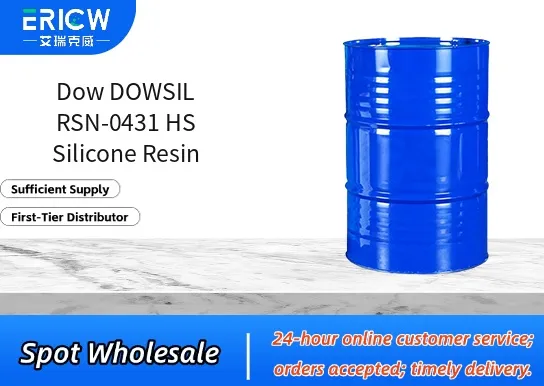
High-solids, solvent-based silicone resin offering excellent thermal stability up to 250 °C continuous use.
Provides superior electrical insulation properties with low dielectric loss and high volume resistivity.
Forms durable, flexible, and crack-resistant films upon solvent evaporation and thermal cure.
Compatible with common organic resins (e.g., epoxy, polyester) for hybrid formulation flexibility.
Low volatility and minimal outgassing after curing — suitable for demanding electronic and aerospace applications.
Insulating varnishes for electric motors, transformers, and generators.
Protective coatings for high-temperature wire enamels and magnet wires.
Binders in high-performance abrasive wheels and refractory composites.
Matrix resins in lightweight thermal barrier and EMI shielding composites.
Surface treatments for glass fiber fabrics used in aerospace and industrial filtration.
| Chemical Type | Methyl-phenyl silicone resin |
| Product Form | Solvent solution (xylene/toluene blend) |
| Appearance | Clear, colorless to pale yellow liquid |
| Solids Content | 55–60 wt% (as received) |
| Viscosity (25 °C) | 800–1,200 cP (Brookfield, spindle #3, 20 rpm) |
| Density (25 °C) | 0.92–0.95 g/cm³ |
| Flash Point (Tag Closed Cup) | 38–42 °C |
| Cure Profile | 150 °C × 30 min or 200 °C × 10 min (film formation) |
Q1: What is the primary function of DOWSIL RSN-0431 HS in coating formulations?
A: DOWSIL RSN-0431 HS is a high-solids, hydrophobic silicone resin designed to enhance surface durability, improve mar resistance, and impart water repellency and anti-graffiti performance in protective clear coats and topcoats—particularly for architectural and industrial applications.
Q2: Is DOWSIL RSN-0431 HS compatible with common organic resin systems?
A: Yes, it demonstrates good compatibility with acrylics, polyurethanes, alkyds, and melamine-formaldehyde resins. Compatibility should be verified experimentally in the final formulation, as performance may vary depending on solvent type, polarity, and cure conditions.
Q3: How is DOWSIL RSN-0431 HS typically incorporated into coatings?
A: It is generally added during the let-down stage using standard high-speed dispersers or dissolvers. Pre-dilution in compatible solvents (e.g., xylene, VM&P naphtha, or acetate esters) may aid uniform dispersion. Avoid prolonged high-shear mixing that could degrade molecular integrity.
Q4: Does DOWSIL RSN-0431 HS require heat curing to develop its full performance benefits?
A: While it can provide initial hydrophobicity at ambient conditions, optimal crosslink density, hardness, and chemical resistance are achieved through thermal cure—typically above 120 °C. Performance in air-dry systems is formulation-dependent and may be limited compared to thermally cured films.
Q5: Can DOWSIL RSN-0431 HS be used in low-VOC or high-solids coating systems?
A: Yes—it is formulated as a high-solids resin (typically >70% solids), making it suitable for high-solids and solvent-reduced systems. Its low volatility and absence of reactive diluents support VOC compliance strategies, though final formulation VOC content must be assessed per regional regulatory definitions.
Contact With Us:
E-mail: wangxingqiang@ericwchem.com
Have a Questions? Call Us:
Add:
Building A1, Jiete Industrial Park, Huangpu District, Guangzhou City, Guangdong Province, China