English
 Español
 tiếng việt
 русский
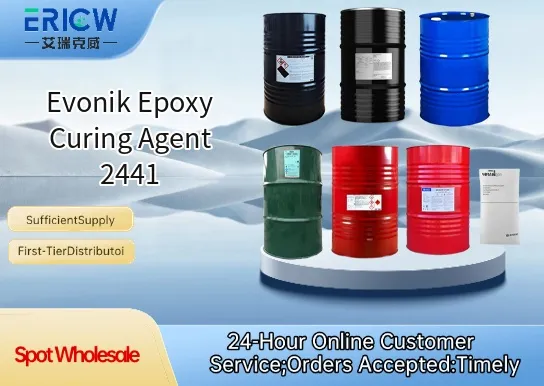
High reactivity with standard bisphenol-A and bisphenol-F epoxy resins.
Enables fast ambient-cure or low-bake formulations without sacrificing pot life.
Delivers excellent chemical resistance and mechanical performance in cured networks.
Low viscosity for easy handling, metering, and homogeneous blending.
Halogen-free formulation supporting sustainability and regulatory compliance.
Electrical encapsulation and potting compounds for power electronics.
High-performance adhesives for automotive structural bonding.
Coatings for corrosion protection of industrial steel substrates.
Composite matrix resins in wind blade and aerospace tooling applications.
Underfill and conformal coating materials for PCB protection.
| Chemical Type | Amine-based aliphatic curing agent |
| Product Form | Liquid |
| Appearance | Pale yellow to colorless transparent liquid |
| Primary Applications | Encapsulation, adhesives, coatings, composites |
| Key Features | Fast cure, low viscosity, halogen-free |
| Benefits | Improved productivity, enhanced durability, RoHS-compliant |
| Storage Stability | At least 12 months at 20–25 °C in original sealed container |
| Handling Precautions | Use in well-ventilated areas; avoid skin contact and inhalation of mists |
Q1: What is the primary chemical class of Evonik Epoxy Curing Agent 2441?
A: Evonik Epoxy Curing Agent 2441 is a latent, amine-based curing agent specifically designed for epoxy resins, featuring a proprietary modified aliphatic amine structure that enables controlled reactivity and extended pot life at ambient conditions.
Q2: How does this curing agent perform in high-gloss or low-odor applications?
A: It is formulated to support excellent surface appearance in coatings and adhesives, with inherently low volatility and minimal amine odor—making it suitable for indoor applications and high-gloss finishes where aesthetic and environmental performance are critical.
Q3: Is Evonik Epoxy Curing Agent 2441 compatible with standard DGEBA-type epoxy resins?
A: Yes, it demonstrates broad compatibility with conventional liquid and solid bisphenol-A and bisphenol-F epoxy resins, as well as many modified epoxy systems—including cycloaliphatic and novolac epoxies—without requiring additional accelerators in most formulations.
Q4: What is the typical processing window (pot life) when used in ambient-cure formulations?
A: At room temperature, it provides a significantly extended pot life—often several hours—depending on resin type, concentration, and ambient humidity—enabling practical handling in industrial coating, adhesive, and composite manufacturing processes.
Contact With Us:
E-mail: wangxingqiang@ericwchem.com
Have a Questions? Call Us:
Add:
Building A1, Jiete Industrial Park, Huangpu District, Guangzhou City, Guangdong Province, China