English
 Español
 tiếng việt
 русский
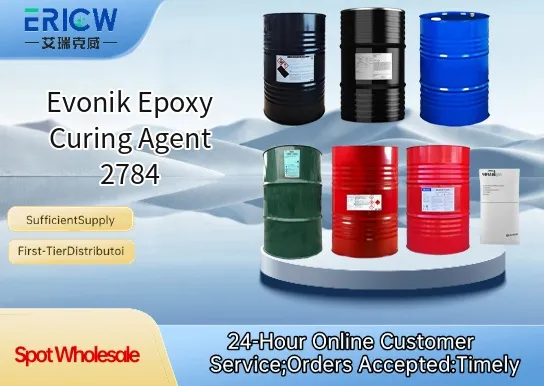
High reactivity with standard bisphenol-A and bisphenol-F epoxy resins.
Enables fast ambient-cure formulations without external heat input.
Delivers excellent chemical resistance, particularly to alkalis and solvents.
Low viscosity improves processability and facilitates easy mixing and degassing.
Provides superior adhesion to metals, composites, and concrete substrates.
Industrial flooring systems requiring rapid return-to-service.
Structural adhesives for automotive and aerospace assembly.
Protective coatings for offshore and marine infrastructure.
Electrical encapsulation and potting compounds for high-reliability electronics.
Repair mortars and grouts in civil engineering applications.
| Chemical Type | Aliphatic amine adduct |
| Product Form | Liquid |
| Appearance | Pale yellow to amber clear liquid |
| Density (20 °C) | ~0.95–0.98 g/cm³ |
| Viscosity (25 °C) | 200–400 mPa·s |
| Amine Value | 320–360 mg KOH/g |
| Reactivity Profile | Fast ambient cure, gel time < 30 min at 23 °C (1:1 w/w with DGEBA) |
| Primary Applications | High-performance structural adhesives, protective coatings, flooring, electrical encapsulation |
Q1: What is the primary chemical class and functional mechanism of Epoxy Curing Agent 2784?
A: Evonik Epoxy Curing Agent 2784 is an amine-based latent curing agent designed for epoxy resins. It exhibits low reactivity at ambient temperature, enabling extended pot life and improved processing safety, while delivering efficient crosslinking upon thermal activation—typically above 120 °C.
Q2: Which epoxy resin systems is this curing agent most commonly compatible with?
A: It is broadly compatible with standard bisphenol-A and bisphenol-F based liquid and solid epoxy resins, as well as novolac epoxies. Performance optimization may require minor formulation adjustments depending on resin functionality, molecular weight, and desired cure profile.
Q3: How does the latency of Curing Agent 2784 compare to conventional amine hardeners?
A: Compared to standard aliphatic or aromatic amines, Curing Agent 2784 offers significantly enhanced latency—supporting stable one-component formulations with shelf lives exceeding 12 months under recommended storage conditions, without requiring refrigeration.
Q4: What are typical application methods and end-use performance benefits?
A: It is widely used in powder coatings, filament-wound composites, and pre-impregnated (prepreg) materials. End-use benefits include excellent glass transition temperature (Tg) development, good chemical resistance, and mechanical robustness after full thermal cure—making it suitable for demanding industrial and electrical insulation applications.
Q5: Is special handling or safety equipment required during processing?
A: As with many amine-containing compounds, appropriate personal protective equipment (PPE)—including gloves, safety goggles, and adequate ventilation—is recommended during handling. The product is not classified as highly sensitizing, but good industrial hygiene practices should always be observed.
Contact With Us:
E-mail: wangxingqiang@ericwchem.com
Have a Questions? Call Us:
Add:
Building A1, Jiete Industrial Park, Huangpu District, Guangzhou City, Guangdong Province, China