English
 Español
 tiếng việt
 русский
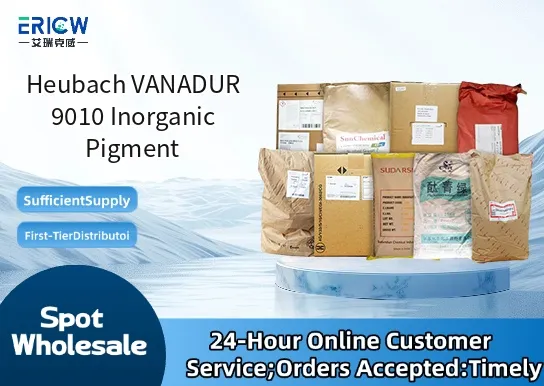
High thermal stability up to 800 °C in oxidizing atmospheres.
Excellent chemical resistance to acids, alkalis, and solvents.
Non-toxic formulation compliant with major global regulatory frameworks including REACH and RoHS.
Consistent color performance and batch-to-batch reproducibility.
Low oil absorption enabling efficient dispersion in high-solids systems.
Ceramic glazes and frits for architectural tiles and tableware.
High-temperature coatings for industrial exhaust systems and furnace linings.
Coloration of refractory materials including fire bricks and castables.
Pigmentation of glass enamels and vitreous coatings.
Specialty inks for heat-resistant labeling on metal and ceramic substrates.
| Chemical Type | Vanadium-based mixed metal oxide (V–Ti–Zr system) |
| Product Form | Fine dry powder |
| Appearance | Grayish-black granular powder |
| Primary Applications | High-temperature ceramics, refractories, and specialty coatings |
| Key Features | Thermal stability, inertness, non-volatility above 600 °C |
| Benefits | Color retention under extreme thermal cycling; no heavy metal leaching |
| Density (g/cm³) | ~3.8–4.2 (typical) |
| Particle Size (D₅₀, µm) | 1.5–2.5 (laser diffraction) |
Q1: What is the primary chemical composition of VANADUR 9010?
A: VANADUR 9010 is a high-performance inorganic pigment based on a mixed metal oxide system, engineered to deliver stable yellow-to-orange hues with excellent thermal and chemical resistance. Its exact phase composition is proprietary to Heubach, but it is formulated without heavy metals such as lead, cadmium, or mercury.
Q2: Is VANADUR 9010 suitable for use in plastics processing at elevated temperatures?
A: Yes — VANADUR 9010 is specifically developed for demanding polymer applications, including injection molding and extrusion. It demonstrates outstanding thermal stability up to typical processing temperatures of polyolefins, engineering thermoplastics, and certain thermosets, with minimal color shift or degradation under standard residence times.
Q3: How does VANADUR 9010 perform in terms of lightfastness and weather resistance?
A: As an inorganic pigment, VANADUR 9010 offers inherently high lightfastness and excellent resistance to UV exposure and atmospheric conditions. It is widely selected for outdoor applications where long-term color retention is critical, such as automotive exterior components and architectural plastic profiles.
Q4: Can VANADUR 9010 be used in food-contact plastics?
A: VANADUR 9010 is designed to meet stringent regulatory expectations for indirect food contact applications. While final compliance depends on the full formulation and end-use conditions, the pigment itself contains no intentionally added substances restricted under major global food-contact frameworks, and is routinely evaluated by customers for use in approved packaging and processing equipment.
Q5: What is the recommended dosage range for optimal color development and dispersion?
A: Dosage depends on the base polymer, desired shade intensity, and processing method. VANADUR 9010 is typically used at low concentrations due to its high tinting strength and opacity — generally ranging from 0.1% to 2% by weight — with effective dispersion achievable using standard compounding equipment and appropriate carrier resins.
Contact With Us:
E-mail: wangxingqiang@ericwchem.com
Have a Questions? Call Us:
Add:
Building A1, Jiete Industrial Park, Huangpu District, Guangzhou City, Guangdong Province, China