English
 Español
 tiếng việt
 русский
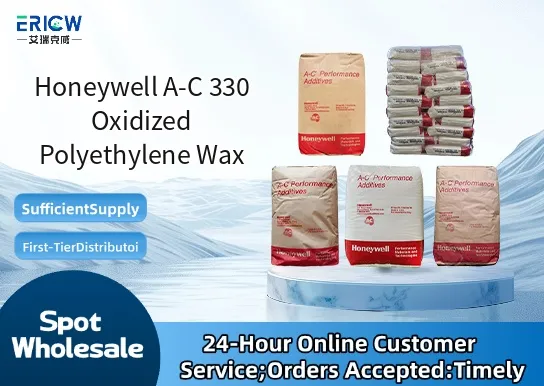
Highly oxidized polyethylene backbone providing excellent polarity and compatibility with polar resins and pigments.
Low melt viscosity enables easy dispersion and processing in high-shear compounding and extrusion systems.
Superior lubricity and slip performance for improved surface finish and reduced die build-up in thermoplastics.
Enhanced thermal stability up to 220 °C, supporting high-temperature polymer processing without significant degradation.
Consistent particle size distribution and low volatility, contributing to minimal fume generation during melt processing.
Polyolefin masterbatches (e.g., color, additive, and filler concentrates) for improved pigment wetting and dispersion stability.
Engineering thermoplastics including ABS, PC, and PA, where it acts as an internal/external lubricant and mold release aid.
Water-based and solvent-based coatings and inks, serving as a matting agent and surface modifier for scratch resistance.
PVC compounds (rigid and flexible), enhancing fusion efficiency, melt flow, and surface gloss control.
Hot-melt adhesives, where it improves open time, tack balance, and heat resistance of the final bond.
| Chemical Type | Oxidized polyethylene wax |
| Product Form | Pale yellow to light brown granules or flakes |
| Appearance | Free-flowing, non-dusty solid at room temperature |
| Melt Point (°C) | 105–112 (ASTM D3418) |
| Acid Number (mg KOH/g) | 18–22 (ASTM D974) |
| Saponification Number (mg KOH/g) | 20–24 (ASTM D974) |
| Viscosity (cP, 150 °C) | 120–160 (Brookfield RV, spindle #27) |
| Key Features | Polar functionality, low volatility, high thermal stability, excellent dispersibility |
Contact With Us:
E-mail: wangxingqiang@ericwchem.com
Have a Questions? Call Us:
Add:
Building A1, Jiete Industrial Park, Huangpu District, Guangzhou City, Guangdong Province, China