English
 Español
 tiếng việt
 русский
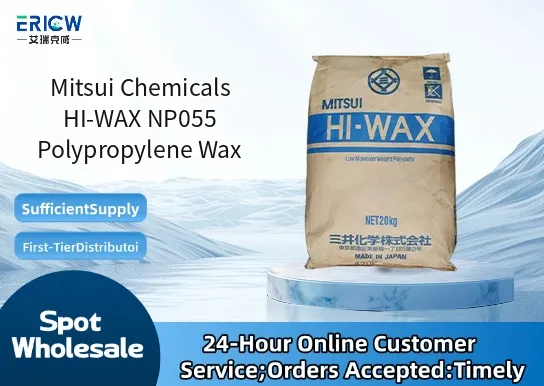
Highly uniform molecular weight distribution for consistent performance in compounding and dispersion.
Excellent thermal stability up to 300 °C, supporting high-temperature processing such as extrusion and injection molding.
Low viscosity melt with superior lubricity, enhancing flowability and mold release in polymer systems.
Outstanding compatibility with polypropylene (PP), polyethylene (PE), and engineering thermoplastics.
Non-toxic and compliant with major regulatory frameworks including FDA 21 CFR §178.3750 for indirect food contact applications.
Internal and external lubricant in PP and PE masterbatches for improved pigment dispersion and extruder output.
Processing aid in automotive interior trim compounds to reduce die buildup and improve surface gloss.
Slip and anti-block agent in blown and cast films for packaging and agricultural films.
Surface modifier in engineered composites containing glass fiber or mineral fillers to enhance fiber wetting and interfacial adhesion.
Release agent in thermoplastic elastomer (TPE) formulations for soft-touch overmolding applications.
| Chemical Type | Polypropylene homopolymer wax |
| Product Form | Pellets (cylindrical, ~3 mm diameter) |
| Appearance | White to off-white semi-crystalline solid |
| Melt Point (°C, DSC, 10°C/min) | 155–162 |
| Penetration (0.1 mm, 25°C, 100 g, 5 s) | 4–8 |
| Brookfield Viscosity (mPa·s, 180°C) | 15–25 |
| Acid Number (mg KOH/g) | < 0.1 |
| Density (g/cm³, 23°C) | 0.90–0.91 |
Contact With Us:
E-mail: wangxingqiang@ericwchem.com
Have a Questions? Call Us:
Add:
Building A1, Jiete Industrial Park, Huangpu District, Guangzhou City, Guangdong Province, China