English
 Español
 tiếng việt
 русский
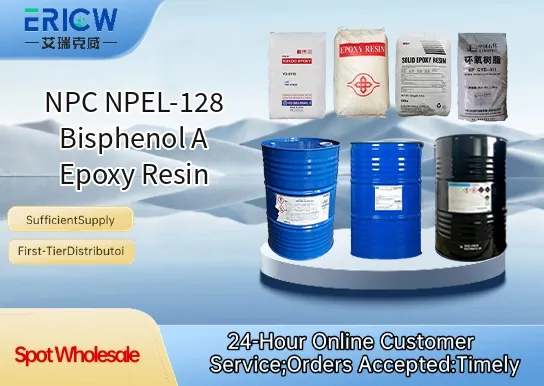
High epoxy equivalent weight (EEW) of 470–490 g/eq, enabling precise stoichiometric control in curing formulations.
Low viscosity at 25 °C (10,000–12,000 cP), facilitating easy handling, mixing, and impregnation in composite processing.
Excellent thermal stability with glass transition temperature (Tg) of cured resin exceeding 125 °C after post-cure.
Superior chemical resistance to alkalis, dilute acids, and common solvents when fully cured.
Consistent batch-to-batch reproducibility, meeting stringent quality requirements for industrial composites and electrical encapsulation.
Electrical insulation systems for medium-voltage transformers and dry-type reactors.
Structural adhesives in aerospace and automotive bonding applications requiring high Tg and dimensional stability.
Matrix resin for filament-wound pressure vessels and fiber-reinforced polymer (FRP) tanks.
Encapsulation compounds for power electronics, including IGBT modules and high-power LED assemblies.
Powder coating base resin for durable, corrosion-resistant industrial metal finishing.
| Chemical Type | Bisphenol A-based liquid epoxy resin |
| Product Form | Clear to pale yellow viscous liquid |
| Appearance | Homogeneous, transparent, free from gels or suspended particles |
| Epoxy Equivalent Weight (EEW) | 470–490 g/eq |
| Viscosity at 25 °C | 10,000–12,000 cP |
| Chlorine Content (Total) | ≤ 800 ppm |
| Softening Point | Not applicable (liquid at room temperature) |
| Volatiles Content | ≤ 0.3 wt% |
Contact With Us:
E-mail: wangxingqiang@ericwchem.com
Have a Questions? Call Us:
Add:
Building A1, Jiete Industrial Park, Huangpu District, Guangzhou City, Guangdong Province, China