English
 Español
 tiếng việt
 русский
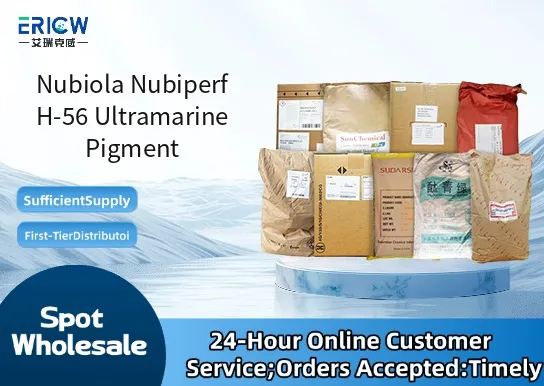
Exceptional lightfastness and weather resistance for long-term color stability.
High tinctorial strength with intense, clean blue-violet hue.
Excellent heat stability up to 180 °C, suitable for medium-temperature processing.
Low sulfate content ensuring improved compatibility in sensitive resin systems.
Free-flowing powder form with consistent particle size distribution for uniform dispersion.
Plastics: Polyolefins, ABS, PS, and PVC compounds requiring non-bleeding blue shades.
Architectural coatings: Interior and exterior water-based and solvent-based decorative paints.
Inks: High-performance offset, flexographic, and screen printing inks.
Construction materials: Colored concrete, stucco, and dry-mix mortars.
Masterbatches: Carrier-compatible formulations for color concentrate production.
| Chemical Type | Sodium aluminosilicate sulfide (synthetic ultramarine) |
| Product Form | Free-flowing fine powder |
| Appearance | Deep blue-violet powder with matte finish |
| Primary Applications | Plastics, architectural coatings, inks, construction materials |
| Key Features | Lightfastness ≥7 (ISO 105-B02), pH stability 5.5–8.5 |
| Benefits | No migration in polyolefins; non-toxic, heavy-metal-free |
| Particle Size (D50) | 8–12 µm (laser diffraction) |
| Specific Surface Area | 14–18 m²/g (BET method) |
Q1: What are the key performance advantages of Nubiperf H-56 compared to standard ultramarine pigments?
A: Nubiperf H-56 offers enhanced thermal stability and improved resistance to acidic environments, making it particularly suitable for demanding polymer processing conditions and applications where conventional ultramarines may degrade or discolor.
Q2: Is Nubiperf H-56 suitable for use in food-contact plastics?
A: Nubiperf H-56 is designed for industrial and non-food-contact applications. It is not certified for direct food-contact use under current global regulatory frameworks, and users must verify compliance with applicable local regulations for their specific end-use.
Q3: How does Nubiperf H-56 perform in polyolefin systems such as PP and PE?
A: The pigment demonstrates excellent dispersion stability and color consistency in polyolefins, especially during high-temperature extrusion and injection molding. Its optimized particle surface treatment supports compatibility and minimizes plate-out tendencies in these matrices.
Q4: Can Nubiperf H-56 be used in aqueous coatings or inks?
A: While primarily developed for thermoplastic polymers, Nubiperf H-56 can be incorporated into aqueous systems with appropriate dispersants and stabilization protocols—however, its performance and long-term stability in water-based media should be validated case by case through application testing.
Contact With Us:
E-mail: wangxingqiang@ericwchem.com
Have a Questions? Call Us:
Add:
Building A1, Jiete Industrial Park, Huangpu District, Guangzhou City, Guangdong Province, China