English
 Español
 tiếng việt
 русский
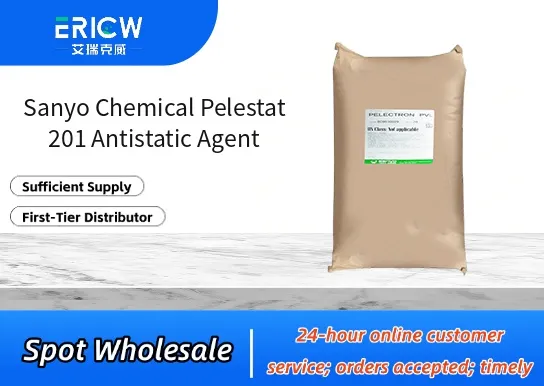
Highly effective internal antistatic performance with rapid charge dissipation in polyolefin and styrenic resins.
Excellent thermal stability suitable for processing temperatures up to 230 °C (e.g., injection molding, extrusion).
Low migration and blooming resistance, ensuring long-term surface resistivity control without compromising aesthetics.
Compatible with common polymer additives including UV stabilizers, flame retardants, and colorants.
Non-volatile and halogen-free formulation, supporting regulatory compliance for electronics and packaging applications.
Antistatic packaging films for electronic components and semiconductor handling trays.
Injection-molded housings for office automation equipment and medical devices.
Extruded pipes and profiles used in cleanroom and static-sensitive industrial environments.
Automotive interior parts requiring ESD-safe surfaces, such as console trims and sensor housings.
3D printing filaments (PP/PS-based) where electrostatic discharge mitigation is critical during post-processing.
| Chemical Type | Cationic quaternary ammonium compound |
| Product Form | Pellets |
| Appearance | White to off-white free-flowing pellets |
| Primary Applications | Polypropylene (PP), polystyrene (PS), ABS, and their blends |
| Recommended Dosage | 0.5–2.0 wt% depending on substrate and performance requirements |
| Key Features | Internal antistatic, thermally stable, low volatility, non-staining |
| Benefits | Reduces surface resistivity to 10⁹–10¹¹ Ω/sq; improves dust resistance and handling safety |
| Storage Conditions | Store in original sealed container at 5–30 °C, protect from moisture and direct sunlight |
Contact With Us:
E-mail: wangxingqiang@ericwchem.com
Have a Questions? Call Us:
Add:
Building A1, Jiete Industrial Park, Huangpu District, Guangzhou City, Guangdong Province, China