English
 Español
 tiếng việt
 русский
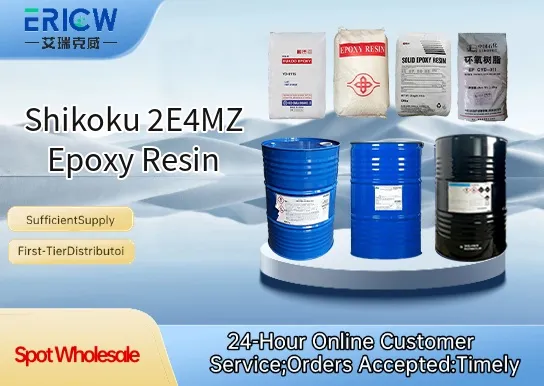
Highly reactive latent curing agent based on 2-ethyl-4-methylimidazole (2E4MZ) for epoxy systems.
Enables precise processing control with extended pot life at ambient temperature and rapid cure onset above 80 °C.
Delivers excellent thermal stability and high glass transition temperature (Tg) in cured networks.
Provides superior adhesion to metals, composites, and engineered plastics without surface priming.
Low volatility and low odor formulation, supporting safer industrial handling and compliance with VOC-restricted environments.
Aerospace composite bonding and structural adhesive formulations.
Electronics encapsulation and underfill materials for advanced packaging.
High-performance wind turbine blade adhesives and matrix resins.
Automotive powertrain components requiring thermal cycling resistance.
Prepreg and infusion resin systems for carbon fiber reinforced polymers (CFRP).
| Chemical Type | Latent imidazole-based curing agent |
| Product Form | Pale yellow to light amber crystalline solid |
| Appearance | Free-flowing crystalline powder |
| Melting Point | 75–79 °C |
| Active Hydrogen Equivalent Weight | ≈110 g/eq |
| Storage Stability | ≥12 months at ≤25 °C in sealed container |
| Solubility | Readily soluble in common epoxy diluents (e.g., DGEBA, glycidyl ethers) |
| Key Features | Latent reactivity, low activation energy, high Tg promotion |
Q1: What is the primary functional role of Shikoku 2E4MZ in epoxy formulations?
A: Shikoku 2E4MZ is a latent, imidazole-type epoxy curing accelerator designed to enable controlled reactivity—providing extended pot life at ambient temperatures while delivering rapid and efficient cure upon thermal activation, typically above 120 °C.
Q2: How does 2E4MZ differ from conventional imidazole accelerators in terms of handling and stability?
A: Unlike many low-molecular-weight imidazoles, 2E4MZ exhibits improved thermal latency and reduced volatility, resulting in enhanced formulation shelf life and safer handling during compounding and storage under standard industrial conditions.
Q3: Is Shikoku 2E4MZ compatible with common epoxy resins and modifiers?
A: Yes—it demonstrates broad compatibility with standard bisphenol-A and bisphenol-F epoxy resins, as well as with reactive diluents, toughening agents, and fillers commonly used in electrical encapsulation, powder coatings, and advanced composites.
Q4: What are typical dosage guidelines for 2E4MZ in thermosetting epoxy systems?
A: It is typically used at low concentrations—generally ranging from 0.1% to 2% by weight relative to the epoxy resin—depending on the desired balance of latency, gel time, and final crosslink density; optimization requires empirical testing within the target formulation.
Q5: Can 2E4MZ support high-performance applications such as LED encapsulation or aerospace-grade composites?
A: Yes—its clean thermal activation profile, low volatility, and ability to promote highly crosslinked networks make it suitable for demanding applications requiring excellent thermal stability, dielectric integrity, and long-term reliability under elevated temperature exposure.
Contact With Us:
E-mail: wangxingqiang@ericwchem.com
Have a Questions? Call Us:
Add:
Building A1, Jiete Industrial Park, Huangpu District, Guangzhou City, Guangdong Province, China