English
 Español
 tiếng việt
 русский
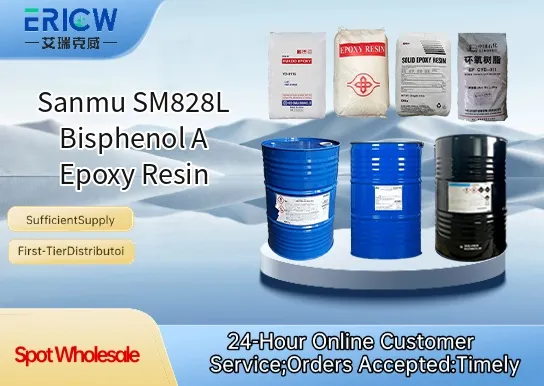
High purity bisphenol A-based epoxy resin with consistent molecular weight distribution.
Excellent thermal stability and low volatility for safe handling and processing.
Superior adhesion to metals, composites, and cured polymer substrates.
Low chloride content (< 500 ppm) ensuring reduced corrosion risk in electronic encapsulation.
Optimized viscosity (12,000–14,000 cP at 25°C) for efficient dispensing and impregnation.
Electrical insulation and potting compounds for power electronics and transformers.
Structural adhesive formulations for aerospace composite bonding.
Prepreg matrix resin for high-performance carbon fiber laminates.
Coating systems requiring chemical resistance and UV stability.
Encapsulants for LED modules and semiconductor packaging.
| Chemical Type | Bisphenol A diglycidyl ether (DGEBA) epoxy resin |
| Product Form | Clear to pale yellow viscous liquid |
| Appearance | Homogeneous, transparent, free from gels or suspended particles |
| Epoxy Equivalent Weight (EEW) | 187–193 g/eq |
| Viscosity (25°C) | 12,000–14,000 cP |
| Chloride Content | ≤ 500 ppm |
| Softening Point | 12–16°C |
| Volatile Matter | ≤ 0.5 wt% |
Q1: What is the primary functional role of Sanmu SM828L in epoxy formulations?
A: Sanmu SM828L serves as a standard-grade bisphenol A-based liquid epoxy resin, primarily used as the base polymer matrix in thermosetting systems. It provides structural integrity, chemical resistance, and adhesion when cured with appropriate hardeners such as amines or anhydrides.
Q2: Is SM828L suitable for high-gloss coating applications?
A: Yes — due to its low viscosity and excellent clarity, SM828L is commonly selected in high-performance protective and decorative coatings where surface smoothness, gloss retention, and UV stability (when formulated with stabilizers) are critical.
Q3: How does SM828L compare to higher-molecular-weight solid epoxy resins in terms of processing?
A: As a liquid resin at room temperature, SM828L offers easier handling, lower mixing energy, and improved compatibility with fillers and modifiers compared to solid epoxy grades. It eliminates the need for pre-heating or solvent dilution in many ambient-cure or low-bake applications.
Q4: Can SM828L be used in food-contact compliant epoxy systems?
A: SM828L may be incorporated into food-contact epoxy formulations where regulatory compliance is achieved through full system validation — including selection of approved curing agents, additives, and post-cure conditions. End-use compliance must be verified by the finished formulation manufacturer against applicable regional requirements.
Contact With Us:
E-mail: wangxingqiang@ericwchem.com
Have a Questions? Call Us:
Add:
Building A1, Jiete Industrial Park, Huangpu District, Guangzhou City, Guangdong Province, China