English
 Español
 tiếng việt
 русский
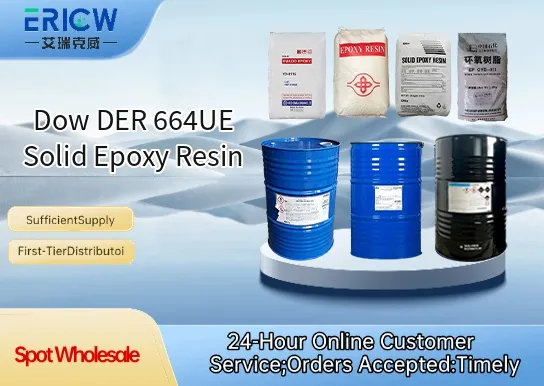
High-purity bisphenol-A based solid epoxy resin with consistent molecular weight distribution.
Excellent thermal stability and low volatile organic compound (VOC) content for compliant processing.
Optimized melt viscosity for efficient handling in extrusion, compression molding, and powder coating applications.
Superior adhesion to metals, glass, and composites without requiring surface priming.
Enhanced chemical resistance to alkalis, dilute acids, and solvents after full cure.
Electrical encapsulation and potting compounds for transformers, sensors, and power modules.
Powder coatings for corrosion protection of steel infrastructure and automotive components.
Composite matrix resin for filament-wound pressure vessels and structural wind blade adhesives.
Prepreg systems in aerospace-grade laminates requiring high glass transition temperature (Tg).
High-performance adhesives for electronics assembly and semiconductor packaging substrates.
| Chemical Type | Bisphenol-A epoxy resin |
| Product Form | Off-white to light tan solid flakes |
| Appearance | Free-flowing crystalline flakes |
| Epoxy Equivalent Weight (EEW) | 470–490 g/eq |
| Melting Point | 105–115 °C |
| Softening Point | 85–95 °C (ASTM E28) |
| Volatiles Content | <0.3 wt% (105 °C, 2 h) |
| Key Features | Low chloride content, high purity, excellent storage stability |
Q1: What is the primary functional advantage of Dow DER 664UE compared to standard solid epoxy resins?
A: Dow DER 664UE is a specially modified solid epoxy resin designed for enhanced compatibility with polar polymers and improved melt-processability, making it particularly suitable for reactive extrusion and high-solids coating formulations where uniform dispersion and controlled reactivity are critical.
Q2: Is Dow DER 664UE suitable for use in food-contact applications?
A: Dow DER 664UE is not pre-qualified for direct food-contact applications. Formulators must conduct full regulatory evaluation—including migration testing and compliance verification—based on final end-use conditions, processing parameters, and applicable regional regulations before considering use in food-contact systems.
Q3: How should Dow DER 664UE be handled during thermal processing to avoid degradation?
A: Due to its solid nature and thermal sensitivity, Dow DER 664UE should be processed below its onset decomposition temperature—typically under controlled time–temperature profiles in extruders or mixers. Avoid prolonged residence at temperatures exceeding 180 °C, and ensure adequate ventilation to manage potential volatile by-products during melting.
Q4: Can Dow DER 664UE be used as a compatibilizer in polyolefin-based blends?
A: Yes—it is frequently employed as a reactive compatibilizer in polyolefin/nylon or polyolefin/polyester blends, where its epoxide functionality enables covalent bonding at the interface, improving interfacial adhesion and mechanical performance in engineered thermoplastic compounds.
Contact With Us:
E-mail: wangxingqiang@ericwchem.com
Have a Questions? Call Us:
Add:
Building A1, Jiete Industrial Park, Huangpu District, Guangzhou City, Guangdong Province, China