English
 Español
 tiếng việt
 русский
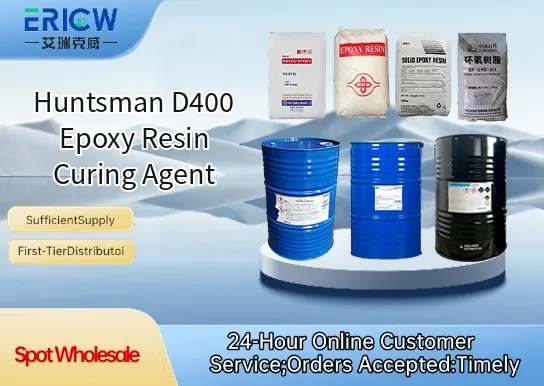
Fast-reacting aliphatic amine-based curing agent for rapid epoxy system development.
Excellent low-temperature cure performance, enabling efficient processing down to 5 °C.
Low viscosity and high reactivity ensure superior wetting of fillers and reinforcements.
Provides outstanding mechanical properties, including high tensile strength and impact resistance.
Low volatility and reduced amine blush tendency compared to conventional aliphatic amines.
Structural adhesives for automotive and transportation assembly.
High-performance coating systems for industrial maintenance and corrosion protection.
Electrical encapsulation and potting compounds for power electronics.
Composite matrix resins in wind blade and aerospace tooling applications.
Flooring and grouting systems requiring rapid return-to-service.
| Chemical Type | Aliphatic polyamine |
| Product Form | Liquid |
| Appearance | Pale yellow to amber clear liquid |
| Primary Applications | Epoxy resin curing for adhesives, coatings, composites, and encapsulants |
| Key Features | Fast cure, low-temperature reactivity, low viscosity, low amine blush |
| Benefits | Improved productivity, enhanced mechanical performance, reliable interfacial adhesion |
| Storage Stability | At least 12 months in original unopened container at 20–25 °C |
| Handling Precautions | Use with adequate ventilation; avoid skin and eye contact; refer to SDS |
Q1: What is the primary function of Huntsman D400 in epoxy systems?
A: Huntsman D400 is a latent, amine-based curing agent designed to provide controlled reactivity and extended pot life at ambient temperatures, while enabling rapid and thorough cure upon thermal activation—making it especially suitable for one-component (1K) epoxy formulations requiring storage stability and high-performance crosslinking.
Q2: How does D400 compare to conventional aromatic amine hardeners in terms of handling and safety?
A: Unlike highly reactive aromatic amines, D400 exhibits low volatility and reduced skin sensitization potential due to its blocked amine structure. It is non-corrosive and easier to handle in industrial environments, though standard personal protective equipment (PPE) and good ventilation are still recommended during processing.
Q3: What types of epoxy resins is D400 typically compatible with?
A: D400 demonstrates broad compatibility with standard liquid and solid bisphenol-A and bisphenol-F epoxy resins, as well as many novolac and cycloaliphatic epoxies. Compatibility and cure profile should be verified experimentally for each specific resin system and application requirement.
Q4: What is the typical thermal activation temperature range for full cure with D400?
A: Full crosslinking generally occurs within a thermal window of 130–180 °C, with cure time decreasing as temperature increases. Optimal performance is achieved through tailored time–temperature profiles aligned with substrate sensitivity and production throughput needs.
Contact With Us:
E-mail: wangxingqiang@ericwchem.com
Have a Questions? Call Us:
Add:
Building A1, Jiete Industrial Park, Huangpu District, Guangzhou City, Guangdong Province, China