English
 Español
 tiếng việt
 русский
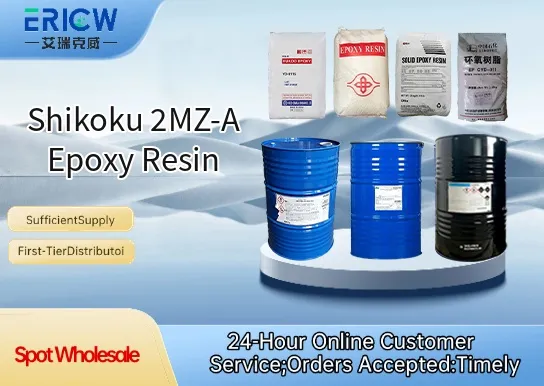
High-purity imidazole-based latent curing agent specifically designed for epoxy resin systems.
Excellent storage stability at room temperature with extended pot life upon heating activation.
Promotes rapid and uniform cure at elevated temperatures (120–150 °C), enabling efficient industrial processing.
Delivers superior thermal resistance and mechanical strength in cured epoxy matrices.
Low volatility and minimal odor, supporting safer handling and improved workplace air quality.
Prepregs and laminates for high-performance printed circuit boards (PCBs).
Structural adhesives in aerospace and automotive composite bonding.
Encapsulants and potting compounds for power electronics and LED modules.
Carbon fiber reinforced polymer (CFRP) matrix resins for lightweight structural components.
Electrically insulating coatings for high-voltage equipment and busbars.
| Chemical Type | Imidazole derivative (2-methylimidazole adduct) |
| Product Form | White to off-white crystalline powder |
| Appearance | Free-flowing fine crystalline solid |
| Melting Point | Approx. 110–115 °C (determined by DSC) |
| Active Ingredient Content | ≥98.5% (by HPLC) |
| Moisture Content | ≤0.3% (by Karl Fischer titration) |
| Storage Stability | Stable ≥12 months at ≤25 °C in sealed container |
| Primary Applications | Latent curing agent for bisphenol-A/F and novolac epoxy resins |
Q1: What is the primary function of Shikoku 2MZ-A in epoxy formulations?
A: Shikoku 2MZ-A is a latent imidazole-type curing agent designed to provide controlled reactivity and extended pot life at ambient temperature, while enabling rapid and efficient crosslinking upon thermal activation—commonly used in high-performance composites, encapsulants, and structural adhesives.
Q2: How does 2MZ-A compare to conventional amine-based hardeners in terms of processing safety and shelf stability?
A: Unlike highly reactive aliphatic amines, 2MZ-A exhibits excellent latency and low volatility, resulting in improved handling safety, longer shelf life of unmixed components, and reduced risk of premature gelation during storage or mixing—making it suitable for pre-impregnated (prepreg) systems and one-component formulations.
Q3: What is the typical activation temperature range for full cure with 2MZ-A?
A: Full network development generally begins above 120 °C, with robust crosslinking achieved between 140 °C and 180 °C depending on formulation composition and desired cure profile—enabling compatibility with common industrial thermal cycles used in electronics encapsulation and composite manufacturing.
Q4: Can 2MZ-A be used in combination with other accelerators or co-curing agents?
A: Yes—2MZ-A is often formulated alongside phenolic resins, anhydrides, or tertiary amines to fine-tune cure kinetics, glass transition temperature (Tg), and mechanical performance; however, compatibility and synergistic effects should be verified experimentally for each specific resin system.
Contact With Us:
E-mail: wangxingqiang@ericwchem.com
Have a Questions? Call Us:
Add:
Building A1, Jiete Industrial Park, Huangpu District, Guangzhou City, Guangdong Province, China