English
 Español
 tiếng việt
 русский
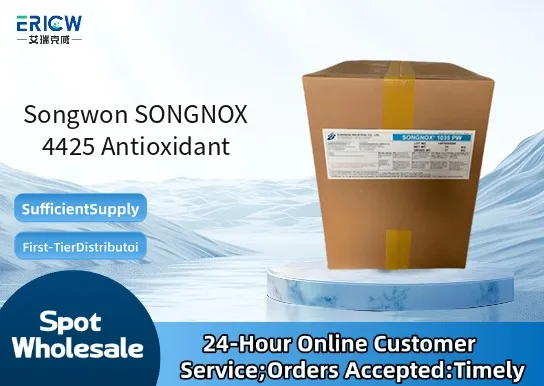
High-performance hindered phenolic antioxidant offering excellent long-term thermal stability.
Low volatility and minimal migration, ensuring sustained protection in demanding processing conditions.
Excellent compatibility with polyolefins, including PP and HDPE, without blooming or plate-out issues.
Non-staining and low color formation, preserving aesthetic integrity in light-colored and transparent applications.
Good hydrolytic stability and resistance to extraction by polar media such as detergents or food simulants.
Polypropylene (PP) fibers and nonwovens for medical and hygiene products.
HDPE and LLDPE packaging films, especially for food contact and pharmaceutical packaging.
Automotive interior components requiring low VOC and odor compliance.
Rotomolded tanks and large-volume containers exposed to elevated temperatures and UV stress.
Recycled polyolefin compounds where stabilization against thermo-oxidative degradation is critical.
| Chemical Type | Hindered phenol |
| Product Form | Free-flowing white to off-white granules |
| Appearance | Uniform granular solid |
| Primary Applications | Polyolefins (PP, PE), especially in food-contact and medical-grade compounds |
| Key Features | Low volatility, high melt stability, excellent compatibility, non-staining |
| Benefits | Extended service life, reduced discoloration, improved recyclability support, regulatory readiness |
| Regulatory Status | Compliant with FDA 21 CFR §178.2010 and EU Regulation (EC) No 10/2011 for food contact plastics |
| Recommended Dosage | 0.1–0.4 wt% depending on polymer type and end-use requirements |
Contact With Us:
E-mail: wangxingqiang@ericwchem.com
Have a Questions? Call Us:
Add:
Building A1, Jiete Industrial Park, Huangpu District, Guangzhou City, Guangdong Province, China