English
 Español
 tiếng việt
 русский
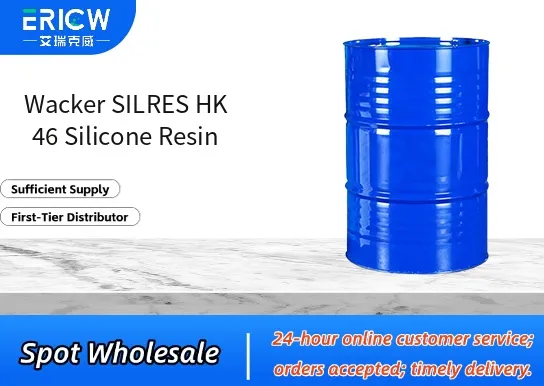
High thermal stability with continuous service up to 250 °C.
Excellent electrical insulation properties even under humid conditions.
Good compatibility with organic resins and pigments for hybrid formulations.
Solvent-based liquid form enabling easy integration into conventional coating systems.
Forms hard, abrasion-resistant, hydrophobic films upon curing.
Heat-resistant coatings for industrial ovens and exhaust components.
Electrical insulation varnishes for motors, transformers, and magnet wires.
Topcoats for architectural metal cladding requiring weather and UV resistance.
Binders in high-performance ceramic and refractory coatings.
Matrix resin in silicone-modified intumescent fire-protection systems.
| Chemical Type | Methyl-phenyl silicone resin |
| Product Form | Liquid, solvent-based (xylene/toluene blend) |
| Appearance | Clear, colorless to pale yellow liquid |
| Solids Content | Approx. 45–50 wt.% |
| Viscosity (25 °C) | 150–300 mPa·s (Brookfield RV, spindle #3) |
| Density (20 °C) | 0.95–0.98 g/cm³ |
| Flash Point (PMCC) | Approx. 35–40 °C |
| Curing Behavior | Thermally cured; full crosslinking at 180–220 °C |
Q1: What is the primary function of SILRES HK 46 in coating and ink formulations?
A: SILRES HK 46 is a methyl-phenyl silicone resin designed to enhance surface functionality—particularly improving slip, scratch resistance, and substrate wetting—without significantly affecting film transparency or gloss. It is commonly incorporated into solvent-based and high-solids systems where durable, low-surface-energy performance is required.
Q2: Is SILRES HK 46 compatible with common organic resins and polymers?
A: Yes, SILRES HK 46 exhibits good compatibility with many thermosetting and thermoplastic resins—including acrylics, alkyds, polyesters, and epoxy systems—especially when used at recommended dosage levels. Compatibility should always be verified experimentally in the final formulation due to variations in solvent composition and molecular weight distribution.
Q3: How is SILRES HK 46 typically incorporated into a formulation?
A: It is generally added during the let-down stage under moderate agitation. Pre-dilution in a suitable solvent (e.g., xylene, toluene, or ester solvents) may improve dispersion uniformity. Avoid high-shear mixing that could degrade resin integrity or induce premature phase separation.
Q4: Does SILRES HK 46 require post-application curing or thermal treatment to develop its full performance?
A: While it delivers immediate surface effects upon solvent evaporation, optimal crosslinking and long-term durability are achieved through thermal curing—typically above 120 °C for conventional oven schedules. Performance benefits such as mar resistance and chemical repellency increase with effective network formation.
Contact With Us:
E-mail: wangxingqiang@ericwchem.com
Have a Questions? Call Us:
Add:
Building A1, Jiete Industrial Park, Huangpu District, Guangzhou City, Guangdong Province, China