English
 Español
 tiếng việt
 русский
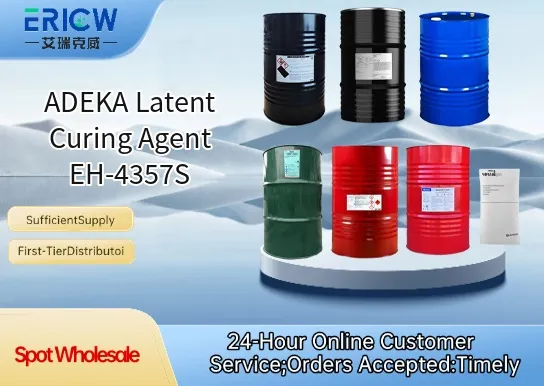
Highly latent at room temperature—enables extended pot life and excellent storage stability.
Activates rapidly upon thermal triggering (typically >120 °C), ensuring efficient epoxy curing without premature reaction.
Halogen-free formulation, supporting environmentally conscious manufacturing and regulatory compliance (e.g., RoHS, REACH).
Delivers superior thermal and mechanical performance in cured epoxy systems, including high glass transition temperature (Tg) and dimensional stability.
Compatible with standard diglycidyl ether of bisphenol-A (DGEBA) and multifunctional epoxy resins.
Prepregs for aerospace and high-performance composites.
Encapsulants and underfills for semiconductor packaging.
Structural adhesives requiring long working time and fast heat-cure cycles.
Electrically insulating coatings and laminating resins for printed circuit boards (PCBs).
3D printing resins with controlled reactivity and post-cure efficiency.
| Chemical Type | Dicyandiamide (DICY)-based latent accelerator system |
| Product Form | White to off-white free-flowing powder |
| Appearance | Free-flowing crystalline powder |
| Primary Applications | Epoxy resin systems requiring delayed cure onset and thermal activation |
| Key Features | Latency, halogen-free, high Tg promotion, low volatility |
| Recommended Storage | Below 25 °C, dry and sealed conditions |
| Onset Activation Temperature | Approx. 120–125 °C (by DSC) |
| Shelf Life (unopened) | 12 months from date of manufacture under recommended storage |
Q1: What is the primary function of EH-4357S in epoxy systems?
A: EH-4357S is a latent curing agent designed to provide extended pot life at ambient temperatures while enabling rapid and efficient crosslinking upon thermal activation—typically above 120 °C—making it suitable for one-component epoxy formulations requiring storage stability and controlled cure profiles.
Q2: Is EH-4357S compatible with standard DGEBA-type epoxy resins?
A: Yes, EH-4357S demonstrates good compatibility with conventional bisphenol-A based liquid and solid epoxy resins, as well as many modified epoxy systems. Compatibility and reactivity should be verified experimentally within the specific formulation due to potential interactions with additives, fillers, or other functional components.
Q3: How does EH-4357S compare to traditional dicyandiamide (DICY) in terms of handling and performance?
A: Unlike DICY, EH-4357S offers improved dispersibility in epoxy melts and reduced dust generation during handling, contributing to enhanced operator safety and process consistency. It also typically delivers more uniform cure behavior and better shelf-life stability in formulated one-pack systems.
Q4: What is the recommended activation temperature range for full cure?
A: Full network development generally occurs during thermal treatment between 140 °C and 180 °C, with cure time depending on part geometry, heating rate, and desired final properties. Lower temperatures may yield partial cure, while higher temperatures can accelerate crosslinking without significant degradation under typical processing conditions.
Q5: How should EH-4357S be incorporated into an epoxy formulation?
A: EH-4357S is typically added directly to the molten or heated epoxy resin under gentle agitation. Homogeneous dispersion is essential prior to cooling and storage. Dosage depends on formulation requirements but generally ranges from 0.1% to 2% by weight relative to resin solids, with optimization advised via small-scale trials.
Contact With Us:
E-mail: wangxingqiang@ericwchem.com
Have a Questions? Call Us:
Add:
Building A1, Jiete Industrial Park, Huangpu District, Guangzhou City, Guangdong Province, China