English
 Español
 tiếng việt
 русский
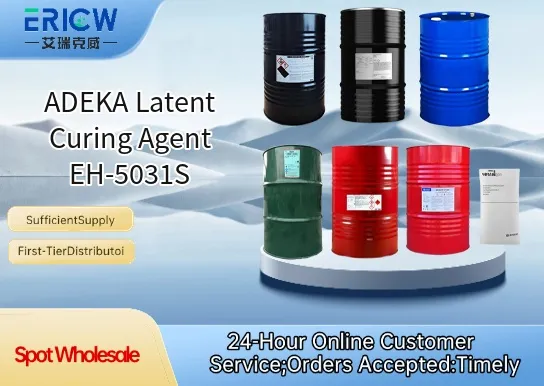
Highly latent at room temperature, enabling extended pot life and excellent storage stability.
Activates rapidly upon heating, delivering efficient epoxy resin curing above 120 °C.
Halogen-free formulation, supporting environmental compliance and low-halogen electronics requirements.
Low volatility and minimal odor, enhancing workplace safety and handling convenience.
Excellent compatibility with standard bisphenol-A and novolac epoxy resins.
Encapsulants and molding compounds for semiconductor packaging.
Powder coatings requiring high flow, smooth finish, and controlled cure onset.
Prepregs and laminates in printed circuit board (PCB) manufacturing.
Adhesives for electronic assembly where shelf-life and thermal-triggered bonding are critical.
Structural composites requiring precise processing windows and low-migration additives.
| Chemical Type | Latent imidazole derivative |
| Product Form | Free-flowing white powder |
| Appearance | White to off-white crystalline powder |
| Primary Applications | Epoxy-based encapsulants, powder coatings, PCB laminates |
| Key Features | Room-temperature latency, thermal activation >120 °C, halogen-free |
| Recommended Storage | Below 25 °C, dry and sealed conditions |
| Shelf Life | 12 months under recommended storage conditions |
| Handling Precautions | Use in well-ventilated areas; avoid inhalation of dust |
Q1: What is the primary function of EH-5031S in epoxy systems?
A: EH-5031S is a latent curing agent designed to provide extended pot life at ambient temperatures while enabling rapid and efficient cure upon thermal activation—typically above 120 °C. It supports high-performance crosslinking in one-component epoxy formulations used in coatings, adhesives, and electrical encapsulants.
Q2: How does EH-5031S compare to conventional amine-based curing agents in terms of storage stability?
A: Unlike highly reactive aliphatic amines, EH-5031S exhibits excellent latency and shelf stability when blended with epoxy resins at room temperature—enabling practical formulation of single-pack systems without refrigeration or special handling requirements.
Q3: Is EH-5031S compatible with common epoxy resins such as DGEBA and novolac types?
A: Yes, EH-5031S demonstrates broad compatibility with standard diglycidyl ether of bisphenol-A (DGEBA), hydrogenated DGEBA, and epoxy novolacs. Compatibility and reactivity should be verified experimentally for specific resin grades and intended processing conditions.
Q4: What is the typical dosage range for EH-5031S in epoxy formulations?
A: Dosage depends on the epoxy equivalent weight (EEW) of the base resin and desired thermal profile, but EH-5031S is typically used at low concentrations—generally ranging from 0.1% to 2% by weight relative to the epoxy resin—and may require optimization for cure speed, glass transition temperature, and mechanical performance.
Q5: Does EH-5031S generate volatile by-products during cure?
A: No, EH-5031S cures via a non-volatile, condensation-free mechanism—making it suitable for applications requiring low outgassing, such as electronics encapsulation and high-vacuum environments.
Contact With Us:
E-mail: wangxingqiang@ericwchem.com
Have a Questions? Call Us:
Add:
Building A1, Jiete Industrial Park, Huangpu District, Guangzhou City, Guangdong Province, China