English
 Español
 tiếng việt
 русский
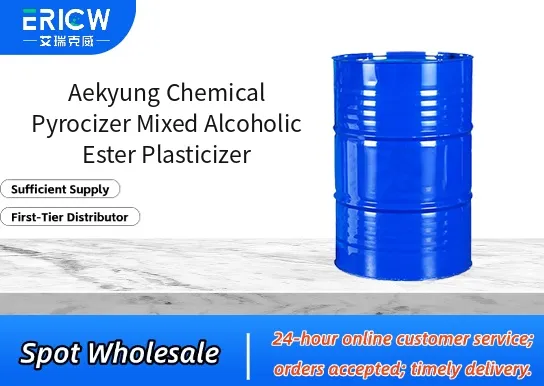
Excellent compatibility with PVC and other polar polymers, ensuring uniform dispersion and stable processing.
Low volatility and high thermal stability, minimizing migration and weight loss during high-temperature extrusion or calendering.
Good low-temperature flexibility retention, enhancing product performance in cold-climate applications.
Reduced fogging tendency compared to conventional phthalate plasticizers, supporting compliance in automotive interior materials.
Non-phthalate formulation aligned with evolving global regulatory requirements (e.g., REACH, RoHS, and California Prop 65).
PVC-based automotive interior trim, including dashboards, door panels, and instrument clusters.
Flexible PVC flooring and wall coverings requiring durability and low-emission profiles.
Medical tubing and blood bags where biocompatibility and extractables control are critical.
Wire and cable insulation for building and industrial applications demanding flame-retardant synergy.
Food-contact compliant packaging films and gaskets when formulated within regulatory limits.
| Chemical Type | Mixed aliphatic-aromatic alcoholic ester (non-phthalate) |
| Product Form | Clear, pale-yellow liquid |
| Appearance | Transparent, homogeneous, free from visible suspended matter |
| Primary Applications | PVC plasticization for automotive, construction, medical, and wire & cable sectors |
| Key Features | Low volatility, high compatibility, non-migrating, low fogging |
| Benefits | Regulatory compliance support, improved processing stability, enhanced end-product longevity |
| Density (20°C) | Approx. 0.97–0.99 g/cm³ |
| Flash Point (COC) | ≥ 210°C |
Contact With Us:
E-mail: wangxingqiang@ericwchem.com
Have a Questions? Call Us:
Add:
Building A1, Jiete Industrial Park, Huangpu District, Guangzhou City, Guangdong Province, China