English
 Español
 tiếng việt
 русский
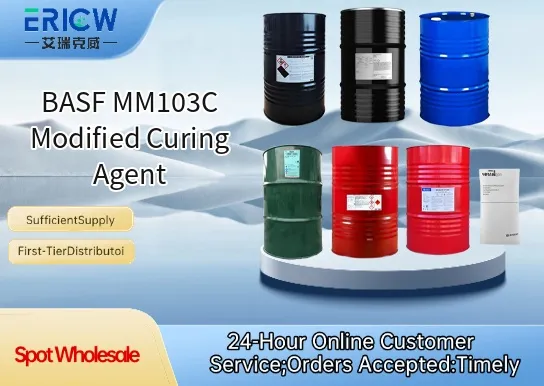
Enhanced pot life extension for improved processing window in ambient-cure epoxy systems.
Optimized reactivity profile enabling balanced gel time and full cure development at room temperature.
Excellent compatibility with standard bisphenol-A and bisphenol-F epoxy resins.
Low viscosity formulation facilitating easy handling, metering, and homogeneous mixing.
Improved chemical resistance in cured films, particularly against alkalis and mild solvents.
Industrial maintenance coatings for steel structures and concrete substrates.
Electrical encapsulation and potting compounds for medium-voltage components.
Adhesives and structural bonding agents in transportation equipment assembly.
Flooring systems requiring rapid return-to-service under ambient conditions.
Repair mortars and grouts for infrastructure rehabilitation projects.
| Chemical Type | Polyamide-modified amine adduct |
| Product Form | Liquid |
| Appearance | Pale yellow to amber transparent liquid |
| Viscosity (25 °C) | 800–1,200 mPa·s |
| Amine Value | 220–260 mg KOH/g |
| Density (20 °C) | 0.94–0.97 g/cm³ |
| Primary Applications | Epoxy coating, adhesive, and flooring systems |
| Key Features | Room-temperature cure, extended working time, low exotherm |
Q1: What is the primary function of BASF MM103C in epoxy systems?
A: BASF MM103C is a modified amine-based curing agent designed to enhance pot life, improve flexibility, and reduce surface tackiness in epoxy coatings and adhesives—particularly where ambient-cure performance and compatibility with challenging substrates are required.
Q2: Is MM103C suitable for low-VOC or high-solids formulations?
A: Yes, MM103C is formulated to support low-VOC and high-solids epoxy systems. Its reactivity profile and low volatility allow formulators to meet evolving regulatory expectations without compromising cure speed or film integrity.
Q3: How does MM103C compare to conventional aliphatic amines in terms of yellowing resistance?
A: MM103C exhibits significantly improved resistance to yellowing under UV exposure and thermal aging compared to standard aliphatic amines, making it well-suited for applications where long-term color stability is critical—such as architectural coatings and clear topcoats.
Q4: Can MM103C be used in combination with other curing agents?
A: Yes, MM103C is compatible with many common epoxy co-curing agents—including polyamides and aromatic amines—and can be blended to fine-tune cure profile, flexibility, and chemical resistance depending on end-use requirements.
Q5: What handling precautions should be observed when working with MM103C?
A: As with most amine-functional curing agents, appropriate personal protective equipment—including nitrile gloves, safety goggles, and adequate ventilation—is recommended during handling and formulation to minimize skin contact and inhalation exposure.
Contact With Us:
E-mail: wangxingqiang@ericwchem.com
Have a Questions? Call Us:
Add:
Building A1, Jiete Industrial Park, Huangpu District, Guangzhou City, Guangdong Province, China