English
 Español
 tiếng việt
 русский
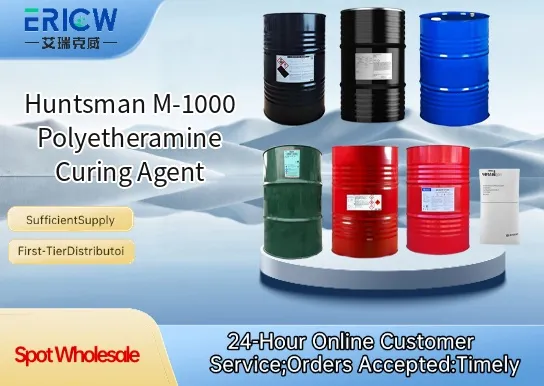
Low-viscosity liquid enabling excellent processability and easy metering in automated systems.
Fast reactivity with epoxy resins, delivering rapid gel time and accelerated cure at ambient temperatures.
Provides superior flexibility and impact resistance in cured epoxy networks without sacrificing chemical resistance.
Low color and high purity support formulation of light-colored or optically clear coatings and composites.
Excellent hydrolytic stability and low volatility, enhancing workplace safety and shelf-life consistency.
High-performance epoxy flooring and industrial maintenance coatings.
Wind turbine blade adhesives and structural composite matrices.
Electrical encapsulation and potting compounds for power electronics.
Aerospace interior components requiring low-VOC, flame-retardant-compatible formulations.
Marine and offshore protective coatings demanding corrosion resistance and toughness.
| Chemical Type | Polyetheramine (tertiary amine-terminated triamine) |
| Product Form | Liquid |
| Appearance | Clear, pale yellow liquid |
| Amine Value | 350–370 mg KOH/g |
| Viscosity (25°C) | 150–250 cP |
| Color (Gardner) | ≤ 3 |
| Primary Applications | Epoxy curing agent for coatings, adhesives, and composites |
| Key Features | Fast ambient cure, low viscosity, flexible toughened network |
Q1: What is the primary function of M-1000 in epoxy systems?
A: M-1000 is a polyetheramine-based curing agent designed to react with epoxy resins to form flexible, tough, and chemically resistant thermoset networks—particularly valued for enhanced elongation, low-temperature performance, and reduced exotherm during cure.
Q2: How does M-1000 compare to traditional aliphatic amines in terms of handling and reactivity?
A: M-1000 offers lower volatility and reduced skin sensitization potential compared to many conventional aliphatic amines. Its reactivity is moderate—enabling good pot life at ambient temperatures while still supporting efficient room-temperature or elevated-temperature cures depending on formulation design.
Q3: Is M-1000 suitable for coatings requiring flexibility and impact resistance?
A: Yes—M-1000 is widely selected for high-performance protective coatings, flooring systems, and elastomeric linings where resilience, crack bridging, and resistance to thermal cycling are critical. Its polyether backbone imparts inherent flexibility without sacrificing adhesion or chemical durability.
Q4: Can M-1000 be blended with other curing agents to modify cure profile or final properties?
A: Yes—M-1000 is commonly co-cured with faster-reacting amines or aromatic amine adducts to balance pot life, cure speed, and mechanical properties. Compatibility and stoichiometric adjustments should be verified experimentally for each specific resin system.
Q5: What storage conditions are recommended to maintain M-1000 stability?
A: Store in tightly sealed containers under dry, cool conditions, away from moisture, strong oxidizing agents, and excessive heat. Prolonged exposure to humidity may lead to viscosity increase or gelation due to atmospheric CO₂ absorption—a common characteristic of amine-based materials.
Contact With Us:
E-mail: wangxingqiang@ericwchem.com
Have a Questions? Call Us:
Add:
Building A1, Jiete Industrial Park, Huangpu District, Guangzhou City, Guangdong Province, China