English
 Español
 tiếng việt
 русский
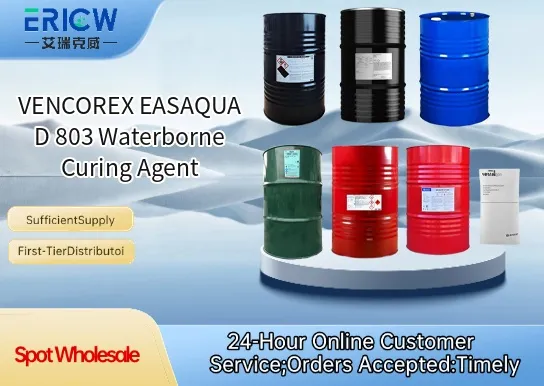
Waterborne polyamine-based curing agent enabling low-VOC, high-performance epoxy systems.
Excellent compatibility with waterborne epoxy dispersions and improved pot life stability.
Delivers rapid ambient-cure kinetics without compromising film hardness or chemical resistance.
Low odor and non-hazardous classification supports safer industrial handling and regulatory compliance.
Enhanced hydrolytic stability ensures consistent performance in humid or variable-temperature environments.
Waterborne epoxy floor coatings for industrial and commercial facilities.
High-solids, low-VOC protective coatings for metal substrates in architectural and infrastructure projects.
Concrete repair mortars and primer systems requiring fast-track curing under ambient conditions.
Interior wall and ceiling coatings where low emission and rapid return-to-service are critical.
| Chemical Type | Aliphatic polyamine adduct, water-dispersible |
| Product Form | Liquid dispersion |
| Appearance | Clear to slightly hazy, pale yellow liquid |
| pH (10% aqueous solution) | 9.5 – 10.5 |
| Non-Volatile Content (wt%) | 55 – 60% |
| Density (20°C) | 1.02 – 1.05 g/cm³ |
| Viscosity (25°C, mPa·s) | 200 – 400 |
| Primary Applications | Waterborne epoxy coatings, primers, and repair mortars |
Q1: What types of resins is EASAQUA D 803 compatible with?
A: EASAQUA D 803 is specifically designed for use with waterborne polyurethane dispersions (PUDs) and acrylic emulsions. It provides efficient crosslinking in ambient- or low-bake-cure systems and demonstrates good compatibility with both anionic and weakly cationic dispersions.
Q2: How does EASAQUA D 803 contribute to film performance?
A: Upon curing, it enhances key mechanical properties including scratch resistance, chemical resistance, and block resistance—particularly in high-solids, low-VOC coatings. The resulting films also show improved mar resistance and durability under humid conditions.
Q3: What is the recommended addition method and storage guidance?
A: Add EASAQUA D 803 to the formulation during the let-down stage, under gentle agitation, at pH 7–9. Avoid prolonged exposure to temperatures above 40 °C. Store in original sealed containers at 5–25 °C; protect from freezing and direct sunlight.
Q4: Is EASAQUA D 803 suitable for food-contact or regulated applications?
A: EASAQUA D 803 is not pre-approved for direct food-contact applications. Formulators must conduct full regulatory evaluation—including migration testing and compliance verification—based on final cured film composition, end-use conditions, and applicable regional requirements.
Contact With Us:
E-mail: wangxingqiang@ericwchem.com
Have a Questions? Call Us:
Add:
Building A1, Jiete Industrial Park, Huangpu District, Guangzhou City, Guangdong Province, China