English
 Español
 tiếng việt
 русский
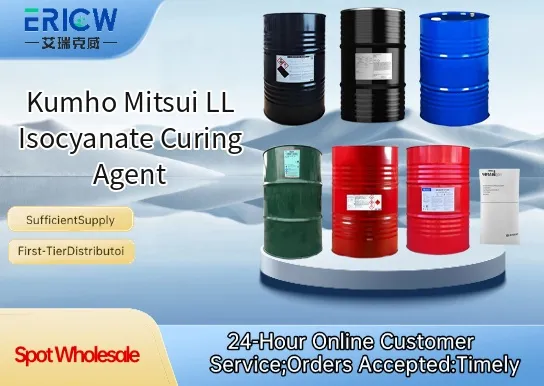
Low-viscosity liquid formulation enabling easy handling and homogeneous mixing with polyol resins.
Excellent compatibility with polyester, polyether, and polycarbonate diols for broad resin system flexibility.
Controlled reactivity profile supporting extended pot life and reliable film formation in ambient or forced-dry conditions.
High crosslink density development yielding superior chemical resistance, abrasion resistance, and mechanical durability.
Low monomeric MDI content meeting stringent VOC and occupational health requirements for industrial coating applications.
Automotive OEM clearcoats and refinish topcoats requiring high gloss and long-term weatherability.
Industrial maintenance coatings for metal and concrete substrates exposed to harsh chemical environments.
High-performance plastic coatings for automotive interior trim and electronic housings.
Two-component polyurethane floor coatings in commercial and pharmaceutical cleanroom facilities.
Adhesives and sealants demanding rapid green strength development and thermal stability.
| Chemical Type | Aliphatic polyisocyanate blend (HDI-based) |
| Product Form | Clear, colorless to pale yellow liquid |
| Appearance | Homogeneous, transparent liquid without sediment |
| NCO Content (wt%) | 15.8–16.2% |
| Viscosity @ 25°C (mPa·s) | 800–1,200 |
| Specific Gravity @ 25°C | 1.17–1.19 |
| Storage Stability (unopened, 25°C) | ≥12 months |
| Primary Applications | 2K PU coatings, adhesives, elastomers, and sealants |
Q1: What types of resin systems is Kumho Mitsui LL compatible with?
A: Kumho Mitsui LL is specifically formulated for use with hydroxyl-functional resins, including polyester polyols, acrylic polyols, and alkyd resins. It is widely employed in two-component polyurethane coating systems requiring balanced reactivity, pot life, and film performance.
Q2: How does Kumho Mitsui LL compare to traditional HDI-based curing agents in terms of handling and stability?
A: As a low-viscosity, biuret-type aliphatic isocyanate, Kumho Mitsui LL offers improved handling characteristics—such as reduced volatility and enhanced storage stability—compared to monomeric HDI. Its sterically hindered structure contributes to lower sensitivity to moisture and extended shelf life under recommended storage conditions.
Q3: What are the typical application areas for coatings cured with Kumho Mitsui LL?
A: Coatings formulated with Kumho Mitsui LL are commonly used in high-performance industrial and automotive refinish applications where excellent gloss retention, UV resistance, and mechanical durability are required—such as clearcoats, topcoats for metal substrates, and protective finishes for plastic components.
Q4: Does Kumho Mitsui LL require catalysts for optimal cure performance?
A: While Kumho Mitsui LL exhibits inherent reactivity toward hydroxyl groups at ambient and elevated temperatures, the use of catalysts such as dibutyltin dilaurate (DBTDL) or tertiary amines may be considered to fine-tune gel time and through-cure speed—particularly in thick-film or low-temperature curing scenarios. Catalyst selection and dosage depend on the specific formulation and process requirements.
Contact With Us:
E-mail: wangxingqiang@ericwchem.com
Have a Questions? Call Us:
Add:
Building A1, Jiete Industrial Park, Huangpu District, Guangzhou City, Guangdong Province, China