English
 Español
 tiếng việt
 русский
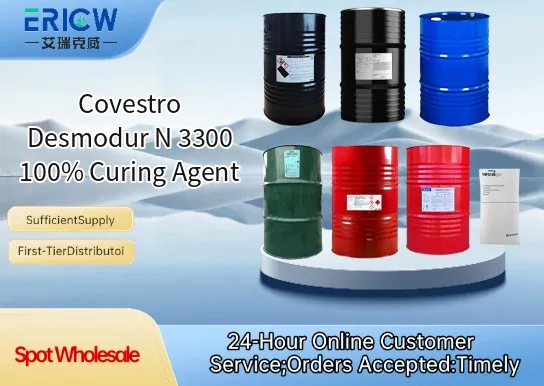
Aliphatic polyisocyanate based on hexamethylene diisocyanate (HDI) trimer — offering excellent UV stability and color retention.
Low-viscosity liquid formulation enabling easy handling, precise metering, and compatibility with standard spray and mixing equipment.
Non-yellowing performance ideal for high-gloss, transparent, or light-colored coating systems requiring long-term aesthetic integrity.
Reactive NCO functionality enables robust crosslinking with hydroxyl-containing resins (e.g., acrylics, polyesters, polyols).
Compliant with REACH and meets stringent VOC regulations when used in solventborne and high-solids coating formulations.
Automotive clearcoats and basecoat/clearcoat systems requiring exceptional gloss and weather resistance.
Industrial maintenance coatings for machinery, rail vehicles, and agricultural equipment.
High-performance wood finishes including furniture, flooring, and architectural millwork.
Plastic coatings for automotive interior trim and consumer electronics housings.
Coil coatings for pre-painted metal used in building façades and appliances.
| Chemical Type | Aliphatic HDI-based polyisocyanate (trimer) |
| Product Form | Liquid |
| Appearance | Clear, pale yellow liquid |
| NCO Content (wt %) | Approx. 15.5–16.5% |
| Viscosity at 25 °C (mPa·s) | 1,800–2,400 |
| Density at 20 °C (g/cm³) | 1.17–1.21 |
| Flash Point (PMCC, °C) | 155–165 |
| Solubility | Compatible with common organic solvents (e.g., acetates, ketones, aromatic hydrocarbons) |
Q1: What is the primary chemical composition of Desmodur N 3300?
A: Desmodur N 3300 is a biuret-type aliphatic polyisocyanate based on hexamethylene diisocyanate (HDI), offering excellent weather resistance, low viscosity, and good compatibility with common polyol systems.
Q2: Is Desmodur N 3300 suitable for ambient-cure or forced-cure applications?
A: It is primarily designed for ambient- or low-temperature cure systems, though it can also be used in forced-cure applications where moderate thermal stability and controlled reactivity are required. Cure speed and film development depend on catalyst selection, humidity, and substrate temperature.
Q3: How should Desmodur N 3300 be stored to maintain its reactivity and shelf life?
A: Store in tightly sealed original containers under dry, cool conditions (below 30 °C) and protect from moisture, direct sunlight, and prolonged exposure to ambient air — as it is highly sensitive to humidity and will undergo premature reaction if exposed to water vapor.
Q4: Can Desmodur N 3300 be used in high-solids or solvent-free formulations?
A: Yes — its relatively low viscosity and high functionality make it well-suited for high-solids coatings and certain low-VOC or solvent-free polyurethane systems, especially when blended with reactive diluents or low-viscosity polyols.
Contact With Us:
E-mail: wangxingqiang@ericwchem.com
Have a Questions? Call Us:
Add:
Building A1, Jiete Industrial Park, Huangpu District, Guangzhou City, Guangdong Province, China