English
 Español
 tiếng việt
 русский
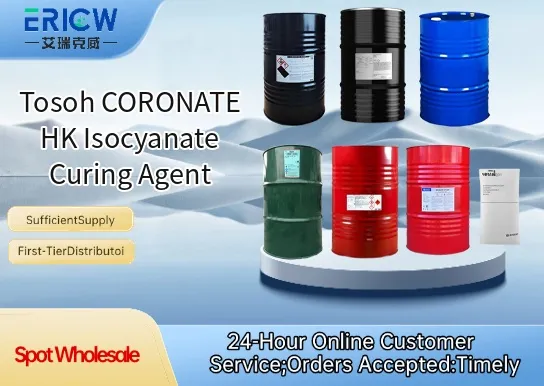
Highly reactive aliphatic isocyanate based on hexamethylene diisocyanate (HDI) trimer chemistry.
Excellent weather resistance and UV stability, minimizing yellowing in outdoor applications.
Low volatility and low monomer content, supporting safer handling and compliance with industrial hygiene standards.
Good compatibility with a wide range of hydroxyl-functional resins including polyesters, acrylics, and polyethers.
Enables fast-cure, high-performance coatings with superior hardness, flexibility, and chemical resistance.
Automotive OEM and refinish clearcoats and basecoats.
Industrial maintenance coatings for machinery, metal structures, and infrastructure.
High-end architectural coatings requiring long-term gloss retention and color stability.
Plastic coatings for automotive interior and exterior trim components.
Two-component polyurethane adhesives and sealants for demanding bonding applications.
| Chemical Type | Aliphatic HDI-based isocyanurate trimer |
| Product Form | Liquid |
| Appearance | Colorless to pale yellow transparent liquid |
| NCO Content (wt%) | 18.5–19.5% |
| Viscosity (25°C, mPa·s) | 1,500–2,500 |
| Density (25°C, g/cm³) | 1.18–1.22 |
| Monomeric HDI Content | <0.5 wt% |
| Storage Stability | Stable under dry, cool conditions (≤25°C); protect from moisture |
Q1: What is the primary chemical composition of CORONATE HK?
A: CORONATE HK is a low-viscosity, aliphatic polyisocyanate based on hexamethylene diisocyanate (HDI) trimer chemistry, modified to provide enhanced storage stability and reduced volatility compared to standard HDI isocyanates.
Q2: How does CORONATE HK differ from aromatic isocyanate curing agents like TDI or MDI?
A: Unlike aromatic isocyanates, CORONATE HK offers superior UV stability and color retention, making it suitable for high-performance coatings where long-term gloss and non-yellowing properties are critical—such as automotive clearcoats, industrial maintenance finishes, and premium architectural systems.
Q3: What is the typical recommended dosage range when using CORONATE HK in two-component polyurethane systems?
A: Dosage depends on formulation requirements and the hydroxyl value of the resin component, but CORONATE HK is generally used at low concentrations—typically ranging from 0.1% to 2% by weight relative to total formulation solids—to achieve optimal crosslink density without compromising pot life or film flexibility.
Q4: Is CORONATE HK compatible with moisture-cure or one-component polyurethane systems?
A: No—CORONATE HK is specifically designed for use in two-component (2K) polyurethane systems where it reacts selectively with hydroxyl-functional resins. It is not formulated for ambient moisture-cure applications and requires precise stoichiometric blending with compatible OH-terminated polymers.
Contact With Us:
E-mail: wangxingqiang@ericwchem.com
Have a Questions? Call Us:
Add:
Building A1, Jiete Industrial Park, Huangpu District, Guangzhou City, Guangdong Province, China