English
 Español
 tiếng việt
 русский
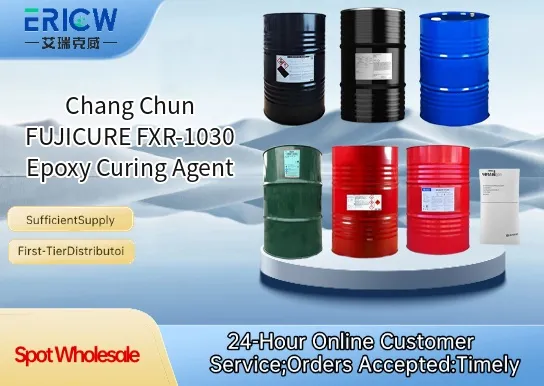
Fast-reacting aliphatic amine-based curing agent for rapid epoxy system development.
Excellent compatibility with standard bisphenol-A and bisphenol-F epoxy resins.
Provides superior mechanical strength and chemical resistance in cured composites.
Low viscosity enables easy metering, mixing, and processing at ambient temperatures.
Meets RoHS compliance requirements for restricted substances in industrial applications.
Electrical encapsulation and potting compounds for PCBs and power modules.
Structural adhesives in automotive and rail interior bonding assemblies.
Coating systems for corrosion protection on steel substrates in industrial environments.
Composite matrix formulations for wind turbine blade tooling and repair resins.
Underfill and conformal coating materials in electronics manufacturing.
| Chemical Type | Aliphatic polyamine adduct |
| Product Form | Liquid |
| Appearance | Clear to pale yellow transparent liquid |
| Density (25°C) | 0.92–0.96 g/cm³ |
| Viscosity (25°C) | 180–250 mPa·s |
| Amine Value | 320–360 mg KOH/g |
| Reactivity Profile | Room temperature curable with moderate pot life (45–90 min at 25°C) |
| Storage Stability | 12 months unopened under dry, cool conditions (≤25°C) |
Q1: What is the primary function of FUJICURE FXR-1030 in epoxy systems?
A: FUJICURE FXR-1030 is a latent, amine-based curing agent designed to provide controlled reactivity and extended pot life at ambient temperatures, while enabling rapid, low-energy thermal cure—ideal for powder coatings, prepregs, and thermosetting composites.
Q2: How does FXR-1030 compare to conventional DICY or aromatic amine hardeners?
A: Unlike DICY, FXR-1030 offers improved storage stability and reduced dust hazard; compared to highly reactive aromatic amines, it delivers better latency and lower exotherm during processing—enhancing safety and handling in high-solids or solvent-free formulations.
Q3: What is the typical recommended cure schedule for FXR-1030?
A: A common thermal cure profile involves an initial dwell at 120–140 °C for 15–30 minutes, followed by post-cure at 160–180 °C if higher crosslink density or Tg is required. Exact conditions depend on resin type, film thickness, and equipment capabilities.
Q4: Is FXR-1030 suitable for food-contact or electrical insulation applications?
A: FXR-1030 is formulated for high-performance industrial epoxy systems and has been successfully used in electrical encapsulation and insulating varnishes. For food-contact compliance, final formulation validation—including migration testing under intended use conditions—is the responsibility of the compounder.
Q5: How should FXR-1030 be stored and handled to maintain performance?
A: Store in original sealed containers at temperatures between 5 °C and 30 °C, away from moisture, direct sunlight, and strong oxidizing agents. Keep containers tightly closed when not in use to prevent humidity absorption and ensure consistent reactivity over time.
Contact With Us:
E-mail: wangxingqiang@ericwchem.com
Have a Questions? Call Us:
Add:
Building A1, Jiete Industrial Park, Huangpu District, Guangzhou City, Guangdong Province, China